Licensed in Louisiana, Texas, and Arkansas
Licensed in Louisiana, Texas, and Arkansas
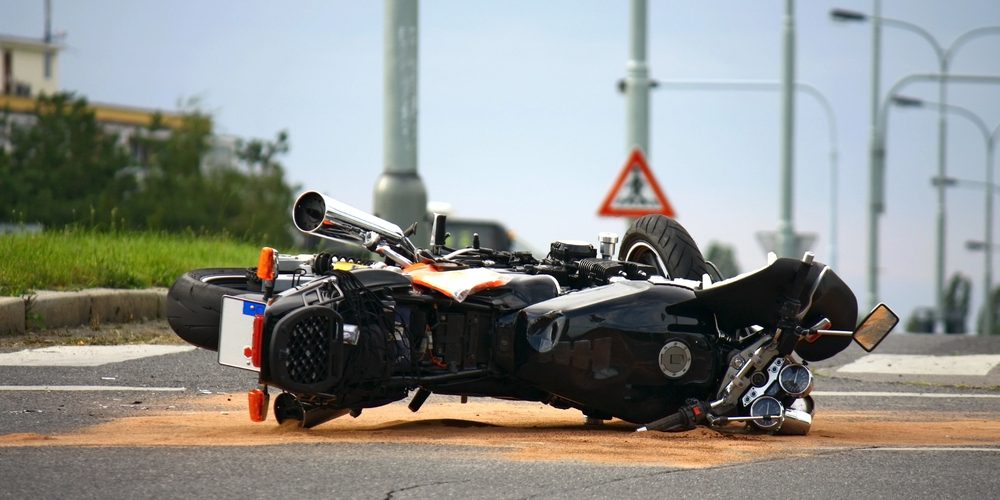
After a motorcycle crash, riders must immediately prioritize safety, document everything, and avoid admitting fault or giving recorded statements to insurers without legal counsel. Key insurance aspects include understanding liability, using uninsured/underinsured motorist (UM/UIM) coverage, and recognizing potential bias from adjusters.
Motorcycle crashes happen in seconds, but the insurance process that follows can stretch on for months. Unlike car accidents, motorcycle crashes often result in more severe injuries, higher medical bills, and more complicated claims. Motorcyclists are exposed and vulnerable on the road, and insurance companies tend to scrutinize these claims more aggressively.
Whether you’re dealing with a totaled bike, a shattered collarbone, or both, understanding how insurance works in the aftermath can mean the difference between a fair settlement and leaving money on the table. Louisiana, Texas, and Arkansas each have their own insurance laws, minimum coverage requirements, and fault rules that directly affect how your claim is handled.
If you’ve been injured in a motorcycle crash and aren’t sure what your next move should be, the attorneys at Lukov Injury Law LLC are here to help you understand your rights and pursue the strongest possible recovery. Contact us today!
After a motorcycle crash, several coverage types may apply: your own liability and collision coverage, the at-fault driver’s bodily injury liability, uninsured/underinsured motorist (UM/UIM) coverage, and medical payments (MedPay) coverage. Which policies apply depends on who caused the crash and what coverage each party carries at the time of the accident.
Motorcycle insurance isn’t a single policy. It’s a collection of different coverage types, and each one plays a different role after a crash.
Liability coverage protects you if you caused the crash and are legally responsible for someone else’s damages. If the other driver is at fault, their liability coverage is what you’d pursue to recover your medical expenses, lost wages, and pain and suffering.
 Collision coverage pays for damage to your own motorcycle, regardless of who caused the accident. If your bike is totaled or needs repairs, this is the coverage that kicks in, minus your deductible.
UM/UIM coverage is arguably the most important protection a rider can carry. If the at-fault driver has no insurance or inadequate limits to cover your injuries, your UM/UIM policy steps in to fill the gap. In Louisiana, UM coverage is required to be offered to every driver, though policyholders can waive it in writing.
MedPay coverage covers medical bills for you and any passenger, regardless of fault. It acts as a first-payer for treatment costs and can be invaluable while you’re waiting for a liability claim to resolve.
Understanding which policies apply to your situation is the first step toward building a strong claim.
Fault rules determine who pays and how much. Louisiana uses modified comparative fault (51% bar), Texas uses modified comparative fault (51% bar), and Arkansas uses modified comparative fault (50% bar).
Your compensation can be reduced by your percentage of fault, and in some states, you may be barred from recovery entirely if your share of fault meets or exceeds the threshold.
Fault isn’t always clear after a motorcycle crash. Drivers frequently claim the rider was speeding, lane-splitting, or doing something to contribute to the collision. Insurance adjusters will look for any reason to assign you partial blame because doing so reduces what they owe you.
The modified comparative fault rule means that if you are found to be 51% or more at fault for the crash, you recover nothing (La. C.C. Art. 2323, as amended by HB 431 / Act 15 of 2025).
If your fault falls below 51%, your compensation is reduced by your percentage of responsibility. In practice, this means insurers argue aggressively for higher fault percentages against motorcyclists.
Texas follows a similar rule. If you are found to be 51% or more responsible for the crash, you recover nothing. If you’re 50% or less at fault, your compensation is reduced proportionally. A $100,000 award gets cut by $30,000 if you’re deemed 30% responsible.
Arkansas operates under a modified comparative fault system with a lower threshold. If your assigned fault equals or exceeds 50%, your claim is barred entirely.
These rules make witness statements, crash reconstruction evidence, police reports, and surveillance footage very important. A motorcycle accident attorney knows how to contest unfair fault assignments and preserve the evidence that shows what really happened.
Immediately after a crash, call 911, seek medical attention, document the scene with photos and video, collect the other driver’s insurance and contact information, get witness names and numbers, and avoid making recorded statements to any insurance company before speaking with an attorney. These steps protect both your health and your legal rights.
The actions you take in the hours and days after a crash directly affect the strength of your insurance claim. Here’s what matters most:
 Call the police. Get an official crash report filed, even for accidents that seem minor. Police reports create an official record of the incident and often contain observations about fault.
Insurance companies often treat motorcycle claims with greater skepticism than car accident claims. Adjusters may assume rider recklessness, question helmet use, or argue that a rider’s choice of transportation increased their risk. These tactics can lower settlement offers, making legal representation particularly valuable for injured motorcyclists.
There’s an uncomfortable truth about motorcycle accident claims: bias exists. Many people, including insurance adjusters and jurors, carry an unconscious perception that motorcyclists are risk-takers. That perception can work against you during settlement negotiations.
Adjusters may ask pointed questions about your speed, your experience level, whether you had a motorcycle endorsement on your license, or whether you were wearing proper safety gear. In some states, helmet use (or the lack of it) can be used to reduce compensation for head injuries.
Louisiana requires all motorcycle riders and passengers to wear helmets regardless of age (RS 32:190). Texas and Arkansas require helmets for riders under 21 but allow exemptions for riders 21 and older who meet certain conditions. Failing to comply with your state’s helmet law can affect how your damages are calculated.
Beyond bias, motorcycle claims tend to involve higher economic damages than car accident claims. Serious orthopedic injuries, long rehabilitation periods, lost wages, and sometimes permanent disability all raise the stakes. Higher-value claims receive more scrutiny from insurers looking to limit payouts.
Total-loss disputes are also common with motorcycles. Insurers may undervalue your bike based on condition estimates that don’t account for custom parts, recent upgrades, or the actual market value for your specific make and model.
An attorney who handles motorcycle injury cases understands these dynamics and knows how to push back.
An injured motorcycle rider may recover economic damages, including medical expenses, lost income, and property damage, as well as non-economic damages like pain and suffering, emotional distress, and loss of enjoyment of life. In cases involving gross negligence, punitive damages may also be available depending on the state.
The scope of what you may be entitled to recover goes well beyond your hospital bill. Damages in a motorcycle injury claim fall into two broad categories.
Economic damages are the tangible, calculable losses: emergency room treatment, surgery, hospitalization, physical therapy, prescription medications, future medical care if ongoing treatment is needed, lost wages during recovery, and diminished earning capacity if your injuries affect your long-term ability to work. Motorcycle damage or total loss is also part of this category.
Non-economic damages compensate for the real but harder-to-quantify effects of a serious injury. The pain you endure during recovery, the emotional trauma of the accident itself, the anxiety that may come with riding again, and the ways your quality of life has been affected all have value. If a crash leaves you unable to participate in activities you loved, that loss counts.
In rare cases involving especially reckless behavior (a drunk driver, for example), punitive damages may be pursued. These are designed to punish the wrongdoer and deter similar conduct, not to compensate the victim. Availability and caps on punitive damages vary across Louisiana, Texas, and Arkansas.
Calculating damages requires gathering medical records, employer documentation, and sometimes the input of a life care planner or vocational specialist. This is where having an attorney in your corner from the start makes a measurable difference.
Insurance adjusters work for the insurance company, not for you. Their goal is to resolve your claim for as little as possible. You should be cautious, avoid volunteering information, refuse early lowball settlement offers, and understand that once you sign a release, you cannot pursue additional compensation, even if your injuries worsen.
The adjuster assigned to your claim may seem friendly and sympathetic. That’s often intentional. Their job, at its core, is to protect the insurance company’s bottom line, not to make sure you receive fair compensation for your losses.
Tactics adjusters use against motorcycle injury claimants include:
 One of the most important things to understand: do not accept a settlement offer before you know the full extent of your injuries. Signing a release closes your claim permanently. If you accept $15,000 three weeks after a crash and then discover you need back surgery two months later, that settlement check won’t cover it.
You have the right to let any settlement offer sit while you consult with an attorney. Claimants represented by attorneys tend to recover more in settlements than those who handle claims on their own, even after attorney fees are factored in.
Motorcycle crashes are serious, and the insurance process that follows is anything but simple. Between fault disputes, coverage gaps, lowball settlement offers, and the inherent bias some adjusters bring to these claims, injured riders face real obstacles to fair compensation. Those obstacles are much easier to overcome with legal support on your side.
The key takeaways are straightforward: know your coverage before you need it, document everything at the crash scene, get medical care without delay, and don’t sign anything or give recorded statements before speaking with an attorney. Louisiana, Texas, and Arkansas each have distinct rules governing fault, UM coverage, and damages, and the details of your state’s law can affect what you may be entitled to recover.
At Lukov Injury Law LLC, attorney Abby Lukov handles motorcycle injury cases across Louisiana, Texas, and Arkansas with personalized attention that large firms rarely offer. She listens, she communicates clearly, and she fights hard for every client who trusts her with their case.
If you or someone you love has been injured in a motorcycle crash, don’t leave your recovery to chance. Call us today for a consultation, and make sure you have someone in your corner.
Disclaimer: This article provides general information and should not be treated as legal advice. Laws change over time, and outcomes depend on the specific facts of each case. No attorney-client relationship is created by reading this article or contacting Lukov Injury Law LLC. For advice about your situation, contact a qualified attorney. Time limits apply to legal claims, so do not delay in seeking legal help.
Most standard auto insurance policies do not cover motorcycles. Motorcycles require a separate policy that includes liability, collision, comprehensive, and optional coverages like UM/UIM and MedPay. Some insurers offer bundled policies for households with both cars and bikes, but the coverage terms for each vehicle should be reviewed carefully before assuming they match.
If the at-fault driver is uninsured, your own uninsured motorist (UM) coverage becomes your primary recovery source. Louisiana mandates that UM coverage be offered with every auto policy, though it can be waived in writing. Without UM coverage, your options are limited to suing the at-fault driver personally, which rarely yields meaningful recovery if they have no assets.
Potentially, yes, but it may affect your compensation. Louisiana requires all motorcycle riders and passengers to wear helmets regardless of age. In Texas and Arkansas, helmet requirements apply to riders under 21, with exemptions available for older riders who meet specific conditions. If you weren’t wearing a helmet and were required to by law, an insurer or opposing attorney may argue that your head injuries were partially your own fault. Even in states where a helmet is not required for your age group, the other side may still try to use it against you. An attorney can help assess how this factor impacts your specific claim.
Statutes of limitations vary by state. Louisiana allows two years from the date of the accident to file a personal injury lawsuit (La. C.C. Art. 3493.1). Texas provides two years, and Arkansas allows three years for most personal injury claims. Missing these deadlines bars your claim entirely, which is why early legal consultation is so important.
Insurers calculate the actual cash value (ACV) of a totaled motorcycle based on factors like make, model, year, mileage, and comparable market listings. Their initial valuation is often lower than what you could realistically replace your bike for. If you’ve made custom upgrades or your bike was in exceptional condition, you can negotiate the valuation and should document any enhancements with receipts and photos before accepting a settlement.
While you likely have a contractual duty to cooperate with your own insurer, that doesn’t mean you should give a recorded statement without preparation. Speak with an attorney first.