Licensed in Louisiana, Texas, and Arkansas
Licensed in Louisiana, Texas, and Arkansas

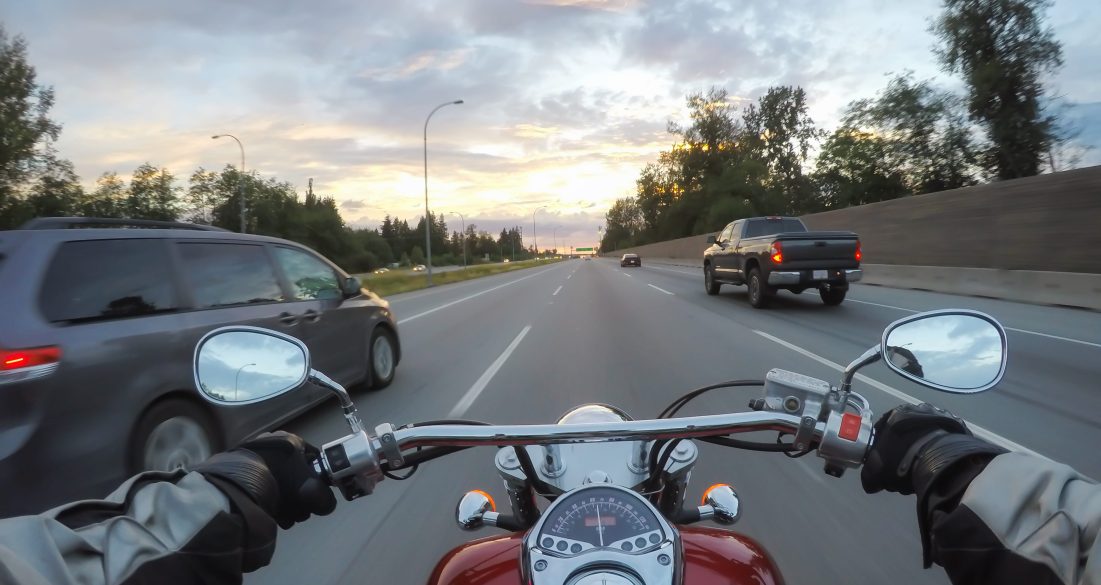
Motorcycle accidents are more severe than car crashes because riders have no protective shell, airbags, or seatbelts between them and the road. A motorcyclist’s body absorbs direct impact forces that a vehicle frame would otherwise deflect. This structural vulnerability, combined with reduced visibility on the road, makes motorcyclists significantly more likely to suffer catastrophic injuries or fatalities.
Motorcycles represent freedom on the open road, but that freedom carries serious physical risk that most riders understand only in the abstract until something goes wrong.
The statistics are sobering: according to the National Highway Traffic Safety Administration (NHTSA), motorcyclists are approximately 24 times more likely to die in a crash per vehicle mile traveled than occupants of passenger cars. That staggering gap isn’t a coincidence. It’s physics, engineering, and human behavior colliding in predictable, preventable ways.
Understanding why motorcycle accidents produce such severe outcomes matters, not just for riders, but for their families, insurance companies, and the courts that evaluate injury claims.
If you or someone you love has been injured in a motorcycle crash in Louisiana, Texas, or Arkansas, Lukov Injury Law LLC is here to help you understand your rights and fight for the compensation you deserve.
Motorcyclists lack the structural protections that surround car passengers.
The difference between riding a motorcycle and driving a car is, at its most fundamental level, the difference between being inside a crash and being part of one.
A modern passenger vehicle is engineered as a protective system:
A motorcycle offers none of this. When a car strikes a motorcycle or when a rider loses control, the rider is separated almost immediately. The rider then becomes a projectile, striking the ground, guardrails, other vehicles, or fixed objects with the full force of whatever speed was involved.
A 40 mph crash for a car occupant might mean a bruised chest from a seatbelt. For a motorcyclist, that same speed impact with the pavement can mean traumatic brain injury, fractured pelvis, degloving injuries, or worse. Helmets reduce the risk of fatal head injury significantly, but they cannot compensate for the absence of every other protective layer a vehicle provides.
Cars have four tires in constant ground contact, making them far more stable when encountering road hazards like gravel, wet leaves, potholes, or oil slicks. A motorcycle’s two-wheel design means any sudden loss of traction can cause the bike to slide or tip instantly, leaving the rider with almost no time or mechanical means to recover.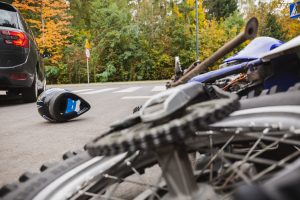
A pothole that causes a car driver mild annoyance can send a motorcyclist to the emergency room. This asymmetry of risk is something that car drivers rarely appreciate, and it’s a dynamic that plays out tragically on highways and side streets throughout Louisiana, Texas, and Arkansas every year.
When a car tire hits a patch of wet pavement or a strip of loose gravel at the curve of a highway ramp, the other three tires maintain enough friction to keep the vehicle stable. The driver may feel a slight shimmy and instinctively correct without even realizing the close call.
A motorcycle in the same situation has only two tires, and if either loses traction at the wrong moment, especially during a turn or braking maneuver, the physics offer very little margin for recovery.
Motorcycles occupy a much smaller visual profile than cars, making them harder for drivers to detect during lane changes, left turns, and intersection crossings.
The phrase “I didn’t see him” appears in police reports following motorcycle accidents with alarming regularity. This isn’t always dishonesty on the part of the driver; it often reflects a genuine perceptual failure.
Human vision is wired to detect threats by pattern recognition, and many drivers have built mental templates for what traffic looks like that simply don’t account adequately for motorcycles.
Left-turn accidents are the single most common type of motorcycle collision, and inattentional blindness is frequently the cause.
A driver waiting at an intersection to turn left sees a gap in oncoming traffic and begins the turn, not noticing the motorcycle in that gap because its narrow profile and the driver’s expectation of car-sized objects create a literal blind spot in perception rather than line of sight.
Visibility is further compromised by:
A dark-colored motorcycle ridden at dusk by a rider wearing non-reflective gear can become nearly invisible to a driver checking a mirror before a lane change. Louisiana and Texas roads are particularly busy with commercial truck traffic, and a motorcyclist riding in a truck’s blind spot—even for a moment—faces extraordinary danger that most passenger car drivers never encounter.
The most severe motorcycle crash injuries include: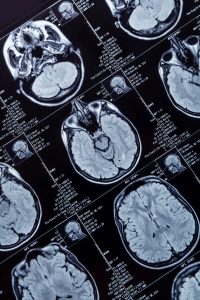
These injuries frequently require multiple surgeries and extended rehabilitation and may result in permanent disability.
Traumatic brain injury remains the leading cause of death in motorcycle accidents, even among helmeted riders.
A helmet significantly reduces—but cannot eliminate—the rotational forces that cause the brain to shift violently inside the skull during impact. Riders who are not wearing helmets face catastrophic head injury risk at even moderate speeds.
Road rash is another injury that people outside the motorcycle community often underestimate.
At highway speeds, pavement acts like industrial sandpaper. What appears to be a skin abrasion can actually remove multiple layers of tissue, exposing muscle, nerve, and bone. Severe road rash requires wound care comparable to burn treatment, carries significant infection risk, and can leave permanent scarring or nerve damage.
Spinal cord injuries from motorcycle crashes frequently result in partial or complete paralysis. The mechanism of injury, a rider being thrown and landing on the head, neck, or upper back, is particularly damaging to cervical vertebrae. Even injuries classified as “incomplete” spinal cord damage can permanently affect sensation, motor function, and bladder or bowel control, radically altering a person’s ability to work, maintain relationships, and live independently.
Motorcycles weigh 400-700 pounds versus cars at 3,000-5,000 pounds, so collision energy transfers almost entirely to the rider’s body instead of being absorbed by vehicle mass and structure.
Newton’s laws of motion are unforgiving on the road. In any collision between two objects, the smaller, lighter object absorbs a disproportionate share of the kinetic energy. When a 4,000-pound SUV strikes a 500-pound motorcycle at 45 miles per hour, the physics of that exchange are devastating for the rider in ways that have no real parallel in car-to-car collisions.
Why motorcycles are particularly vulnerable:
Highway speed crashes, those occurring at 60 miles per hour or above, are particularly likely to be fatal for motorcyclists. NHTSA data consistently shows that survivability drops sharply above certain speed thresholds that are far lower for riders than for vehicle occupant
Motorcycle accident claims face unique challenges, including anti-motorcyclist bias, helmet use disputes, lane-splitting arguments, and complex multi-party liability. Establishing full fault and damages requires thorough investigation and experienced legal strategy.
Motorcyclists are often subject to an unfair cultural presumption that they were riding recklessly, that the accident was somehow their fault by virtue of choosing to ride, or that their injuries are less sympathetic because of a perceived risk they “chose” to accept.
Insurance adjusters are trained to exploit this bias, frequently making early lowball settlement offers, banking on the assumption that riders will accept less to avoid the stress of litigation.
Helmet use is a particularly complex legal factor in the three-state region where Lukov Injury Law LLC serves clients.
Helmet laws by state:
If a rider was not wearing a helmet where it was not legally required to do so, insurers may still attempt to use that fact to argue contributory negligence and reduce the damages owed—a legal maneuver that an experienced attorney can effectively challenge.
Liability in motorcycle crashes is rarely simple. A single accident may involve:
Building a complete picture of liability requires accident reconstruction specialists, medical experts, and attorneys who understand how to coordinate these elements into a coherent, persuasive claim.
Motorcycle accidents are more severe than car crashes for reasons that are structural, mechanical, and deeply human. Riders carry no cocoon of steel around them. Roads that are merely inconvenient for car drivers can be lethal for motorcyclists.
Other drivers’ perceptual failures can end a life in a left-turn intersection in less than a second. And when the crash happens, the injuries that follow are frequently among the most serious and long-lasting that any trauma center sees.
Understanding these dynamics matters because it shapes how accident claims should be built, argued, and resolved. A motorcycle injury claim is not a scaled-down version of a car accident claim; it’s a fundamentally different legal matter with its own evidentiary challenges, bias considerations, and damages complexity. The full impact of a severe motorcycle crash deserves to be thoroughly documented and pursued with full commitment.
If you or a family member has been injured in a motorcycle accident in Louisiana, Texas, or Arkansas, don’t accept the first offer from an insurance company, and don’t assume the legal system will be straightforward. Lukov Injury Law LLC brings personalized attention and dedicated advocacy to every case.
Attorney Abby Lukov is committed to making sure you understand your rights and that the person responsible for your injuries is held fully accountable. Contact Lukov Injury Law LLC today to discuss your case.
If the at-fault driver has no insurance or insufficient coverage to pay for your damages, you may still be able to recover compensation through your own motorcycle insurance policy, provided you have Uninsured/Underinsured Motorist (UM/UIM) coverage. This type of coverage is designed specifically for these situations and can cover your medical bills, lost wages, and other damages up to your policy limits.
Yes, it is possible to seek compensation if a dangerous road condition caused your accident. In such cases, a claim may be brought against the government entity (such as a city, county, or state transportation department) responsible for maintaining the road. However, these claims are often complex, involving specific rules and shorter deadlines for notifying the government of your intent to file a claim. It is important to act quickly and consult with an attorney to preserve your rights.
It is generally unwise to accept an initial settlement offer from an insurance company without first consulting an attorney. Early offers are often significantly lower than what your claim is actually worth and may not account for the full extent of your injuries, future medical needs, or long-term loss of income. Once you accept a settlement, you forfeit your right to seek any further compensation for the accident. An attorney can help you calculate the true value of your claim to ensure you do not settle for less than you deserve.
As a passenger, you have the same rights to seek compensation for your injuries as a driver. Depending on the circumstances of the crash, you may be able to file a claim against the at-fault driver of another vehicle, the operator of the motorcycle you were on, or even a third party responsible for the accident (like a government entity for a road hazard). Because you had no control over the motorcycle’s operation, it is very unlikely that you would be found at fault, which can simplify your claim for damages.
Disclaimer: This article is provided for informational and educational purposes only and does not constitute legal advice. Reading this content does not create an attorney-client relationship with Lukov Injury Law LLC or any of its attorneys. Laws governing motorcycle accidents, personal injury claims, and statutes of limitations vary by jurisdiction and change over time. The information presented here is general in nature and may not apply to your specific circumstances.