
Licensed in Louisiana, Texas, and Arkansas
Licensed in Louisiana, Texas, and Arkansas


Proving a TBI in court depends on objective medical evidence: imaging that shows structural damage, neuropsychological testing that measures cognitive change, treating-provider records that track symptoms over time, and qualified testimony that ties it all to the crash. Because a brain injury is often invisible on the surface, the strength of this proof shapes how a Louisiana claim is valued and resolved.
A traumatic brain injury can change how you think, work, and live, yet it rarely shows up the way a broken bone does on an X-ray. That gap between how serious the injury feels and how little it shows is the central challenge in proving a TBI in court to an insurer, a judge, or a jury.
At Lukov Injury Law, we help injured Louisianans build the medical record that makes an unseen brain injury visible to the people deciding the claim. You work directly with Abby, not a case manager, from the first call through resolution.
This guide walks through the evidence that proves a TBI in a Louisiana court, step by step, so you know what to gather and why each piece matters. Contact us today to talk through your situation in a free case review.
A traumatic brain injury sits at the center of many serious accident claims, but it resists the kind of simple proof other injuries offer. Understanding why helps explain the layered evidence a strong claim relies on.
According to the Centers for Disease Control and Prevention (CDC), the United States recorded roughly 69,000 TBI-related deaths in 2021, about 190 each day, with motor vehicle crashes among the leading causes alongside falls, firearm injury, and assault.
Many more people survive with lasting effects that do not appear on a routine scan. A mild TBI, including a concussion, can leave normal-looking imaging while the person struggles with memory, focus, mood, and fatigue.
That mismatch is what insurers tend to exploit. When the damage is functional rather than visibly structural, the defense often argues the symptoms are exaggerated or unrelated to the crash. The answer is not one dramatic test but a connected record: imaging, standardized testing, consistent treatment notes, and qualified opinions that read together as one coherent story. Each step below adds a layer that, combined, makes the injury difficult to dismiss.
The record that proves a TBI starts in the first hours after the crash, not months later. Early documentation links the injury to the accident and gives every later provider a baseline to build on.
Gaps and delays give the defense room to argue the injury came from something else. Prompt, specific documentation closes that door and protects both your health and your claim.
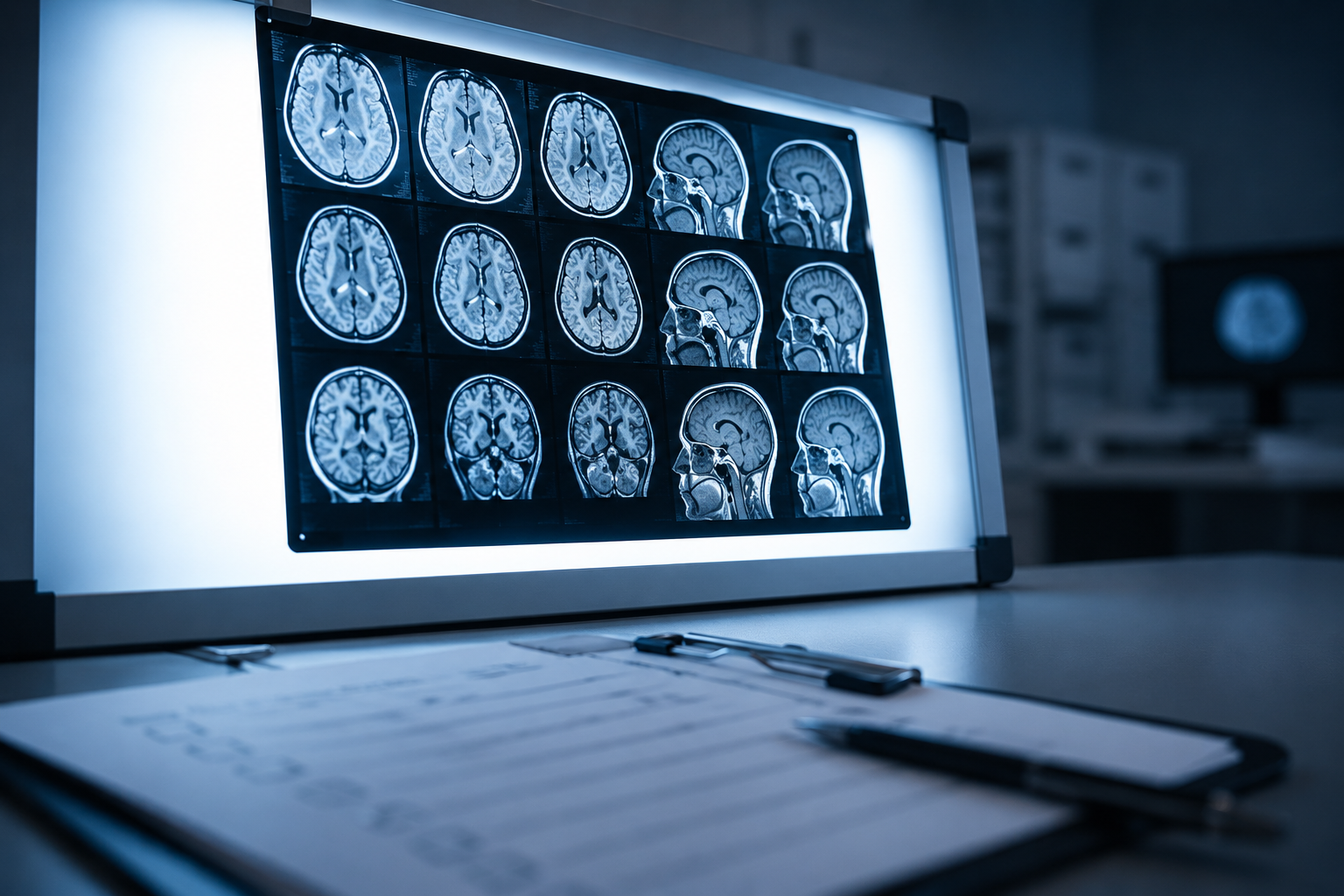
Imaging is often the first objective proof a court looks for, because it can reveal physical injury to the brain. The right scans, ordered at the right time, give a claim a concrete foundation.
A normal scan does not disprove a brain injury, especially a mild one, so imaging is a layer rather than the whole case. Your treating physicians decide which studies fit your situation, and those clinical choices belong in the record.
When imaging looks normal, but symptoms persist, neuropsychological testing often carries the most weight. These standardized tests measure how the brain is actually functioning, putting numbers to an injury that otherwise feels invisible.
 Standardized batteries. A neuropsychologist administers validated tests of memory, attention, processing speed, language, and executive function.
This testing is conducted and interpreted by qualified clinicians, and the findings are theirs to make, not the law firm’s. We keep injury and recovery descriptions general here; questions about your own results belong with your treating provider.
A brain injury claim is often won or lost on consistency. A continuous trail of treatment notes shows the injury is real, ongoing, and tied to the crash, which is far more persuasive than a single dramatic appointment.
These records also anchor the value of future care, which matters when a brain injury affects someone for years. Many of the same proof principles apply to a car accident claim, where a TBI is a frequent and serious result.
Records and scans rarely speak for themselves in court. Qualified witnesses translate the medical file into testimony that a judge or jury can follow and connect the injury to the accident with a reasoned medical opinion.
 Treating physicians. Your own doctors can describe the diagnosis, treatment, and how the injury has affected you, grounded in firsthand care.
These opinions carry weight because they come from credentialed professionals applying accepted methods, not from advocacy alone. We coordinate with
