
Licensed in Louisiana, Texas, and Arkansas
Licensed in Louisiana, Texas, and Arkansas


Wrongful death damages in Louisiana fall into two kinds that can be recovered at once. The wrongful death claim pays surviving family members for their own losses, such as lost support, companionship, and funeral costs. A linked survival action recovers what the deceased went through before death, including pain, medical bills, and lost wages. Extra exemplary damages are limited to specific cases, like a crash caused by a drunk driver.
No amount of money can replace a person, and no family wants their loss measured in dollars. Still, a wrongful death claim is the one tool Louisiana law gives a grieving family to recover the financial weight that lands on them after a death.
Knowing which losses count, and which claim each loss belongs to, helps a family see the full picture before an insurance company offers a number. At My Lawyer Abby, the personal injury practice of Lukov Injury Law LLC, we help families across New Orleans understand the damages available in a wrongful death case under Louisiana law.
This guide breaks down what a family can recover, what the survival action adds, and the limits that can change an award. Contact us today to ask what your family’s claim may include.
A fatal accident usually creates two separate claims, and each one recovers a different set of losses. The wrongful death claim belongs to the survivors, while the survival action stands in for the person who died.
Keeping the two claims separate matters, because the same dollar of loss should not be counted twice. We sort each loss into the claim it belongs to so the full value of the case is presented clearly.
Both claims are usually filed together by the same family members. The split is about what each set of damages represents, not about hiring two different lawyers or filing in two different courts.
When the person who died helped pay the bills, the family loses that income going forward. Louisiana lets survivors recover the financial support they could have reasonably expected over the years ahead.
This includes wages, benefits, and the value of what the person contributed to the household budget. A child’s claim can reach to the support a parent would have provided through the years of raising them.
Courts look at the person’s age, earnings, and work history to project what that support would have been worth over time. The stronger the records, the clearer that future figure becomes.
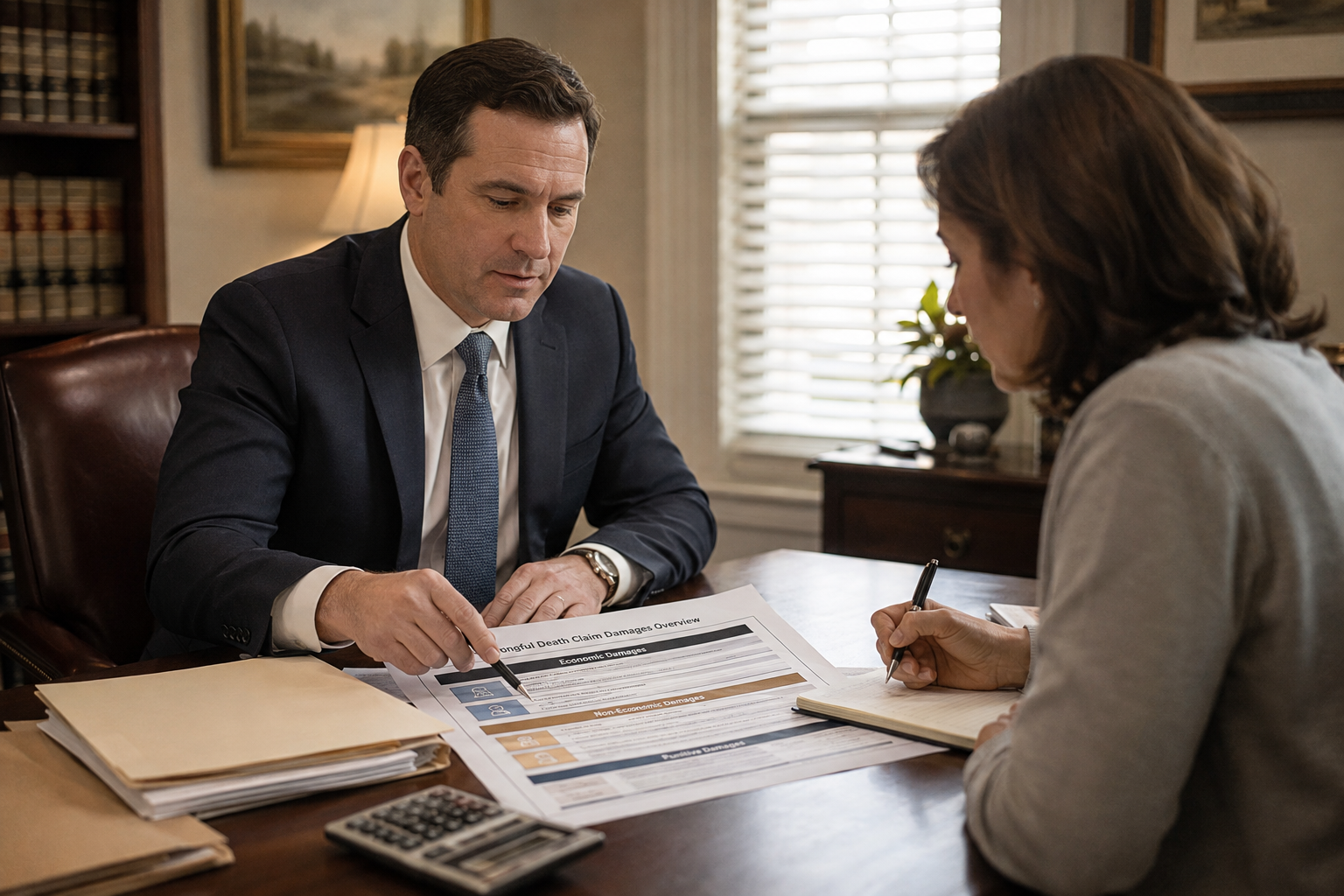 Some of the heaviest losses after a death are not financial at all. Louisiana recognizes the loss of love, affection, companionship, and the relationship itself as real damages a family may recover.
These are often called non-economic damages because they have no receipt attached. A surviving spouse, child, or parent may be entitled to fair compensation for the daily presence and guidance that is now gone.
This part of Louisiana wrongful death compensation looks at the closeness of the relationship and how the loss reshapes daily life. A court may weigh the years the family expected to share and the support that came from having that person present.
People do work at home that a family only notices once it stops. Cooking, childcare, repairs, yard work, and driving all carry value that a wrongful death claim can account for.
When that work now has to be paid for or absorbed by someone else, the cost is a recoverable loss. Courts can hear from the family, and sometimes an economist, to estimate what replacing that work really costs. We help families put a fair value on the everyday tasks the person handled.
A short list of what the person did each week often makes this loss concrete. Childcare, home repairs, and transportation each carry a market price that a family can point to when a claim is being valued.
The bills start arriving long before any claim is resolved. Funeral, burial, or cremation expenses tied to the death can be included in the family’s recovery.
Keeping receipts and invoices for these costs helps document this part of the claim. These expenses are usually some of the clearest, easiest damages to prove. When the family has already paid out of pocket, that money can be claimed back as part of the case.
If the person lived for any length of time after the injury, what they endured matters under the law. The survival action recovers the physical pain and mental anguish the person felt between the injury and death.
The recovery can depend on how long the person survived and what the evidence shows about their awareness. Even a short period of conscious suffering can support this part of the claim.
Survival action damages in Louisiana often rely on medical records, witness accounts, and first-responder reports to show what the person went through. The clearer that record, the easier it becomes to value this loss fairly rather than leaving it to guesswork.
Emergency care, surgery, and hospital stays after a fatal injury often leave large bills behind. The survival action recovers the medical expenses connected to the injury that caused the death.
These costs belong to the survival claim because they were the deceased person’s own expenses. Gathering the hospital and ambulance records early keeps this figure accurate. Health insurers or Medicaid may also seek repayment from this part of the recovery, which is another reason to handle it carefully.
Time between the injury and the death can mean lost paychecks for the person who was hurt. The survival action recovers the wages and earnings the person lost during that window.
This is separate from the family’s forward-looking loss of support in the wrongful death claim. Together, the two claims capture both what the person lost and what the family lost.
Pay stubs, tax returns, and a record of missed shifts help fix this figure with confidence. When the injury kept the person out of work for weeks before death, those lost earnings can add up and belong to the survival action rather than the family’s own claim.
Louisiana usually does not allow punitive damages, which are meant to punish rather than repay. There is a key exception under Civil Code Article 2315.4, which allows exemplary damages when a drunk driver’s intoxication caused the injuries.
These damages can be added on top of the family’s other losses in a qualifying drunk driving case. Many of these claims grow out of fatal car accidents where a driver chose to get behind the wheel impaired.
Proving this part of the claim takes evidence of the driver’s intoxication, such as test results, police findings, or witness accounts. We pursue that proof because it can meaningfully change what a family recovers in a drunk driving death.
Some states put a hard ceiling on what a family can recover. For most Louisiana wrongful death cases, there is no across-the-board cap on damages.
Medical malpractice claims follow their own separate limits, so those cases are handled differently. Outside of that, the value of the claim turns on the facts and the losses, not on a fixed number. A serious loss can be valued for what it actually costs the family, rather than being squeezed into a preset ceiling.
This makes the records behind a claim matter even more, because the award tracks the real losses shown. Strong proof of income, relationships, and expenses gives a family a clearer footing when an insurer tries to argue for a lower figure.
Louisiana now follows a modified comparative fault rule, effective January 1, 2026. If the person who died was partly at fault, the recovery is reduced by their share, and a share above 50 percent can bar recovery entirely.
This rule often becomes a fight b
