
Licensed in Louisiana, Texas, and Arkansas
Licensed in Louisiana, Texas, and Arkansas

People who have been hit by a log truck ask how many tons that truck was allowed to carry, as if the law gave one number. Louisiana answers in pounds: 80,000 pounds, or 40 tons, for the whole loaded vehicle, with separate limits on each axle and higher figures during harvest season under a special permit.
Those figures matter after a crash because weight is one of the few facts about a log truck that can be measured, written down and compared against a limit set out in a statute. Speed, attention and judgment have to be reconstructed. Weight leaves a record.
At Lukov Injury Law, we read the weight rules alongside the facts of the collision, because a figure on a scale ticket only matters to a claim when it connects to how the crash happened.
The sections below set out the gross and axle limits, the harvest season permit, the arithmetic in tons, and where an overweight load fits within Louisiana’s fault rules. Contact us today to talk through your crash and what the records may still show.
The starting point is La. R.S. 32:386(A), which applies to every vehicle on the road and not only to trucks hauling timber. It reads: “The total gross weight of any vehicle or combination of vehicles shall not exceed eighty thousand pounds, and no vehicle or combination of vehicles shall exceed its licensed gross weight.”
Two limits sit inside that one sentence, and both bind at the same time.
The first is the 80,000-pound ceiling on total gross weight. The limit applies to the vehicle or combination of vehicles as a whole, so it covers the truck and trailer, not the logs alone.
The second is the vehicle’s own licensed gross weight. A truck licensed for less than 80,000 pounds has to meet the lower figure.
That second limit is one reason to pull the registration documents for the tractor and trailer early. They also help identify who owned and operated the equipment in a logging truck crash claim.
A truck can sit under its gross limit and still be out of compliance, because Louisiana also limits how much weight may rest on each axle or group of axles. The weight has to be distributed, not just totaled.
La. R.S. 32:386(D) sets a tandem axle limit of 34,000 pounds for vehicles on low pressure pneumatic tires, and then makes an exception for timber: “However on any vehicle carrying forest products in their natural state, the weight limitation shall be thirty-seven thousand pounds per tandem axle.”
That exception turns on the cargo, forest products in their natural state, and it does not change the gross limit in subsection A. A log truck gets more room per tandem axle, not more room overall.
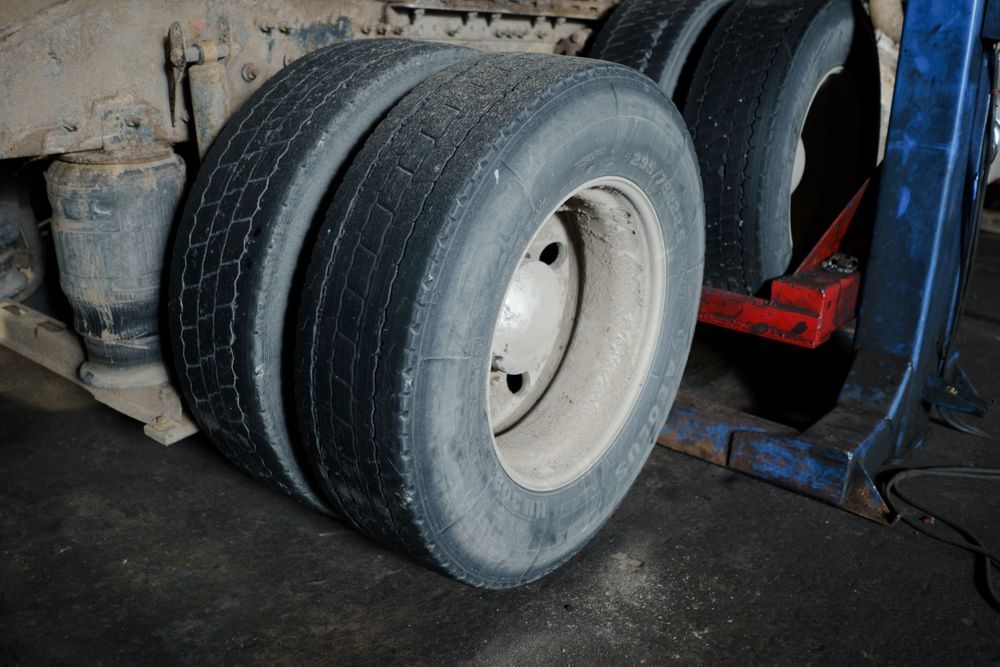 La. R.S. 32:386(K) provides that vehicles “shall be loaded in such manner that the axle limitations” in the statute “are not exceeded.” The same subsection then allows a margin on roads that are not part of the Interstate System.
Off the interstate, an axle is not deemed in violation unless it exceeds its limit by more than 2,000 pounds for the limits in subsections C and F, or by more than 3,000 pounds for the limits in subsections D, E and G. Because the tandem limit for forest products sits in subsection D, the 3,000-pound margin is the one that attaches to it on those roads.
The tolerance has a firm boundary. Subsection K never allows the gross limits in subsection A or subsection I to be exceeded. A load can lean on the axle margin, but the total weight still has to stay within the gross limit.
Because subsection K ties compliance to how the load was placed, the loading arrangement is worth documenting. Log securement is a separate set of rules, covered on our page on why logging truck accidents are more dangerous.
Louisiana allows heavier loads for timber haulers who hold a special permit. Under La. R.S. 32:387(B)(3)(a), on application by the owner or operator of a vehicle “transporting farm and forest products in their natural state,” the secretary shall issue special harvest season permits within forty-eight hours.
The permit does not lift every limit. It replaces the standard figures with a second set of figures, and those figures change depending on the type of road.
Under subsection (B)(3)(a), the permit allows travel “on any state-maintained highway except the interstate system for a total gross weight of eighty-six thousand six hundred pounds.” Any single axle may not exceed 22,000 pounds, and any tandem axle may not exceed 37,000 pounds.
Under subsection (B)(3)(b), the same permit allows a total gross weight of eighty-three thousand four hundred pounds on the interstate system. On those roads, a single axle may not exceed 20,000 pounds and a tandem axle may not exceed 35,200 pounds.
Read together, the two subsections give a permitted log truck a higher allowance off the interstate than on it, with tighter axle limits on the interstate. A load that complied with the permit on a state highway may not comply a few miles later on Interstate 49 or Interstate 20.
After a crash, that structure raises two questions: whether a permit existed on the date of the collision, and whether the load matched the figures for the road the truck was on.
A Louisiana log truck may weigh 40 tons in total under the standard limit, or up to 43.3 tons off the interstate under a harvest season permit, and each gross figure includes the truck and trailer. The statutes state each limit in pounds, so the conversion below uses 2,000 pounds per ton.
Each total is a gross figure for the whole vehicle, so the weight of the logs is only part of it. Every axle limit also has to be met, and no figure in this list describes what a given truck is allowed to haul.
The vehicle’s licensed gross weight also binds under subsection A, so a truck licensed or rated for less has to meet the lower figure.
No. A weight violation and a finding of fault are two separate questions, and Louisiana law keeps them apart.
The weight statutes say what a vehicle may weigh. The obligation to pay for harm comes from La. C.C. art. 2315(A): “Every act whatever of man that causes damage to another obliges him by whose fault it happened to repair it.” The article ties the duty to repair to fault and to damage caused by it, so a claim still has to connect the excess weight to the way the crash unfolded.
That connection is a matter of evidence, and the physical effects of extra weight are where it is built.
None of those effects proves fault by itself. They point to the evidence a reconstruction would need: the measured weight, the axle distribution, the brakes and the road. Where a crash caused a fatal injury, those same records support a wrongful death claim.
Fault in Louisiana is also shared. Under La. C.C. art. 2323, the fault of all persons who contributed to the harm is quantified, whether or not they are parties to the case. That can include the driver, anyone involved in loading the truck, and any other motorist involved.
The article also addresses the injured person’s own share. Paragraph (a) provides: “If the degree or percentage of negligence attributable to the person suffering injury, death, or loss is equal to or greater than fifty-one percent, then the person suffering injury, death, or loss shall not be entitled to recover damages.” Paragraph (b) provides that below that line, “the amount of damages recoverable shall be reduced in proportion to the degree or percentage of negligence attributable to the person suffering the injury, death, or loss.” That version of the article took effect on January 1, 2026, so for an earlier crash the version that applies should be confirmed with a lawyer.
Weight is measurable, but only if the record of the measurement is found. A log truck may have been weighed, permitted and documented at several points before the crash, and each of those records can confirm or contradict the others.
The scene evidence has the shortest life. Once a load is removed after a crash, the weight at impact can only be reconstructed from the paper.
Comparing these sources is where the weight question gets answered, since a permit for state highways means little if the truck was on the interstate. The same comparison work applies to tractor-trailers hauling other cargo, and our page on 18-wheeler crash claims sets out how those cases are investigated.
A log truck weight question has a precise answer in pounds, but the answer only matters to a claim once it is tied to the road the truck was on, the permit it carried and the way the collision happened. At Lukov Injury Law, we gather the scale, permit and registration records first, then measure them against the statute that applied on that stretch of road.
You work directly with Abby Lukov, not a case manager, and the first conversation costs nothing. Call us today to go over the weight,
