Licensed in Louisiana, Texas, and Arkansas
Licensed in Louisiana, Texas, and Arkansas
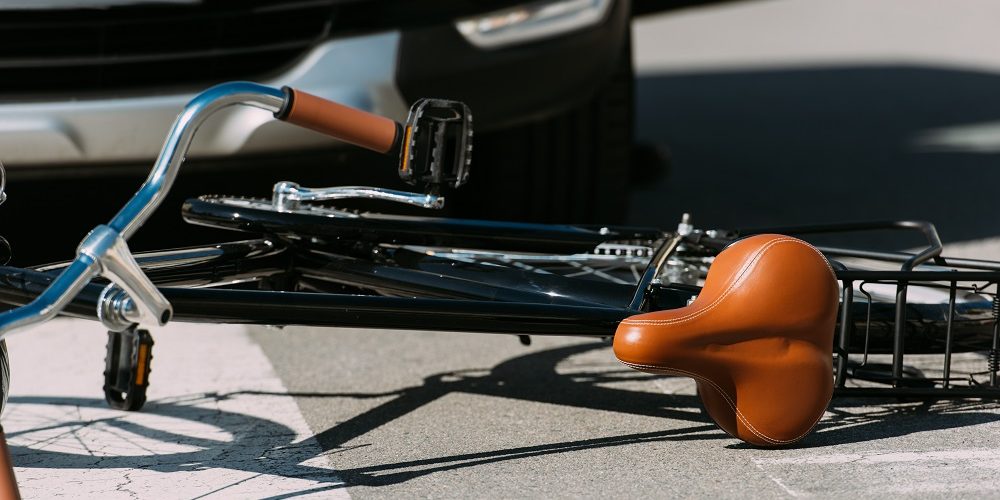
Cycling through Louisiana’s streets should be a safe and enjoyable experience, whether you’re commuting to work, exercising, or running errands. Unfortunately, bicycle accidents involving motor vehicles happen far too often, leaving cyclists with serious injuries, mounting medical bills, and uncertain futures. Understanding why these collisions occur can help cyclists and drivers take preventive measures, but when prevention fails, knowing your legal rights becomes essential.
Bicycles offer none of the protective shell that car occupants enjoy. A moment of inattention, a miscalculation of speed, or a failure to yield can transform an ordinary ride into a life-altering event. Recognizing the most frequent causes of these crashes helps identify who may be liable when they occur.
If you’ve been injured in a bicycle-vehicle collision in Louisiana, contact Lukov Injury Law LLC for a consultation to discuss your bicycle-related case and explore your options for compensation.
Intersections are the most dangerous zones for bicycle-vehicle collisions, accounting for roughly 40% of all cycling accidents nationwide.
The primary culprit is driver inattention combined with what traffic safety experts call “inattentional blindness,”the phenomenon where drivers look but don’t truly see cyclists. Motorists typically scan for other cars, and their brains can literally filter out smaller road users like bicycles.
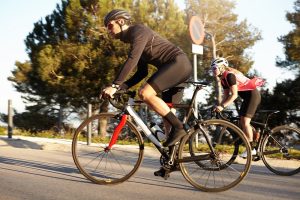 Left-turn collisions are particularly deadly. A driver waiting to turn left often misjudges the speed of an oncoming cyclist or doesn’t notice them at all. The cyclist, who has the right-of-way, continues straight through the intersection only to be struck by the turning vehicle. These crashes frequently result in severe injuries because the impact hits the bicycle’s unprotected side.
Right-hook accidents present another common scenario. A vehicle passes a cyclist and then immediately turns right, cutting across the cyclist’s path. The driver may have seen the cyclist moments earlier but forgot about them, assumed they were slower, or didn’t check mirrors before turning. This often happens near commercial areas where vehicles turn into parking lots or driveways.
Traffic signal timing makes things worse. Many signals are calibrated for vehicle speeds, giving cyclists insufficient time to clear the intersection. Some cyclists aren’t heavy enough to trigger vehicle-detection sensors at traffic lights, forcing them to wait indefinitely or risk running a red light.
The “dooring” accident, where a parked car’s door opens directly into a cyclist’s path, is among the most preventable yet frequently occurring bicycle collisions. This typically happens in urban areas where street parking sits alongside bike lanes or where cyclists must ride close to parked vehicles.
Cyclists have mere seconds, sometimes less than one, to react when a door suddenly appears. Their options are limited and equally dangerous:
Any of these outcomes can cause serious injuries, including head trauma, broken bones, shoulder injuries, and road rash.
Louisiana law requires vehicle occupants to exercise due care when opening doors, but enforcement remains challenging. The Dutch Reach, a technique where drivers use their far hand to open the door, forcing them to turn and look behind, has gained attention as a simple solution, but awareness remains low.
Poorly designed bike lanes worsen the problem. Lanes that run directly alongside parking spaces without adequate buffer zones create a false sense of security. When cities paint bike lanes in the “door zone,” the roughly four-foot area where an opened car door extends, they essentially set cyclists up for these collisions.
Distracted driving has reached epidemic proportions, and cyclists pay a disproportionate price. At 35 miles per hour, a vehicle covers about 51 feet per second, meaning a three-second glance at a phone translates to over 150 feet of blind driving.
Cell phone use is the most dangerous distraction because texting combines three types of impairment:
During those crucial seconds, a cyclist may enter the driver’s path at an intersection, merge into their lane, or signal a turn. The driver, completely unaware, continues forward until impact.
Other distractions, such as eating, reaching for objects, adjusting GPS, or conversing with passengers, create similar risks. For cyclists who rely on drivers to notice them, recognize their intentions, and respond appropriately, even a brief lapse in attention can mean the difference between a close call and a catastrophic collision.
The legal aftermath of these accidents often involves complex questions. Cell phone records can establish whether a driver was using their phone at the time of the crash, but obtaining these records requires proper legal procedures. Working with an experienced attorney who understands how to build a case using available evidence is essential.
Speed dramatically increases both the likelihood and severity of bicycle-vehicle collisions. According to research from the AAA Foundation for Traffic Safety, a pedestrian or cyclist struck at 20 mph faces roughly an 18% chance of serious or fatal injury. At 40 mph, that figure rises to approximately 77%. The faster the vehicle, the less time the driver has to perceive and react, and the greater the force of impact.
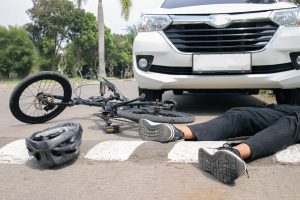 Residential areas see numerous speed-related bicycle accidents, particularly where children ride. Many drivers exceed posted limits on familiar routes, underestimating the risks in neighborhoods where they assume traffic will be light. A child emerging from between parked cars or riding out of a driveway has almost no chance of avoiding a vehicle traveling well above the speed limit.
Stopping distance tells the story clearly. At 25 mph, a vehicle needs roughly 85 feet to stop after the driver perceives a hazard. At 45 mph, that distance extends to approximately 190 feet. When a cyclist suddenly appears, a speeding driver may be physically incapable of stopping in time.
Speed also narrows a driver’s field of vision. At higher velocities, peripheral vision shrinks significantly, making drivers less likely to notice cyclists approaching from the side or riding at the road’s edge.
Road surface conditions that are minor inconveniences for cars can be deadly hazards for bicycles. Potholes, uneven pavement, debris, gravel, and poor drainage force cyclists into sudden movements that can put them in the path of motor vehicles.
Unsafe lane changes account for a substantial percentage of bicycle-vehicle collisions, particularly on multi-lane roads where drivers fail to check blind spots. Cyclists lawfully occupying a lane suddenly find themselves in the path of a merging vehicle, with no escape route and no time to react.
Mirrors reduce blind spots but don’t eliminate them. A cyclist in the adjacent lane may be completely invisible to a driver who checks mirrors, sees no cars, and begins to merge. By the time the driver realizes the error, the cyclist has already been struck or forced off the road.
Highway on-ramps and off-ramps are especially hazardous. Drivers accelerating to merge focus on traffic gaps, not slower-moving bicycles. Drivers exiting often cut across lanes rapidly, failing to notice cyclists who have every right to be there.
Some drivers assume their larger vehicle gives them priority over cyclists. This mindset leads to aggressive merges that force cyclists to brake hard, swerve, or absorb the impact. Louisiana law grants cyclists the same rights to roadways as motor vehicles, but not all drivers understand this.
Commercial vehicles and trucks pose heightened risks. Larger vehicles mean larger blind spots, and air displacement from trucks can destabilize bicycles even without contact.
Alcohol and drug impairment dramatically increase the risk of bicycle-vehicle collisions. Impaired drivers experience reduced reaction times, impaired judgment, decreased coordination, and compromised vision, all of which prove deadly when cyclists share the road. Nighttime hours present the greatest risk, when impaired driving peaks.
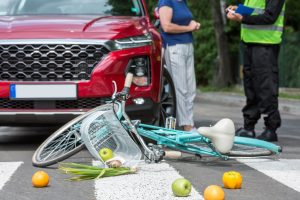 Alcohol affects multiple functions critical to avoiding cyclists. Depth perception deteriorates, making it challenging to judge distances accurately. Peripheral vision narrows, reducing the ability to detect cyclists approaching from the side. Even at legal blood alcohol limits, reaction times are measurably slower. At higher levels, some drivers fail to react at all until after impact.
Prescription medications and illegal drugs create similar impairments. Certain medications cause drowsiness, dizziness, or blurred vision, while drugs like marijuana affect judgment and reaction time. Some drivers don’t realize their medications impair driving ability; others knowingly take the risk.
The legal implications are significant. When an impaired driver strikes a cyclist, criminal charges may proceed alongside civil liability claims. Evidence of impairment strengthens the case for compensation and may support punitive damages. However, building a strong case requires prompt action to preserve evidence, including police reports, chemical test results, and witness statements.
Bicycle-vehicle collisions result from numerous factors, many involving preventable driver errors, intersection failures, distracted driving, speeding, poor road conditions, unsafe lane changes, dooring incidents, and impaired driving. Understanding these common causes helps identify liability and highlights the responsibilities all road users share.
Louisiana law protects cyclists’ rights to use public roadways and holds negligent drivers accountable. If you’ve been injured, preserving evidence, obtaining witness information, and seeking immediate medical attention all contribute to building a strong case for compensation.
Reach out to Lukov Injury Law LLC today for a consultation to discuss your bicycle accident case. Abby and her team understand the unique challenges cyclists face in Louisiana and will fight to ensure you receive the compensation and justice you deserve.
Disclaimer: This article provides general information only and is not legal advice. Laws and outcomes vary by case and jurisdiction. Consult a qualified Louisiana personal injury attorney for advice specific to your situation.
Louisiana doesn’t require adult cyclists to wear helmets, so not wearing one typically doesn’t prevent you from recovering compensation. However, insurance companies may argue your injuries would have been less severe with a helmet, potentially reducing your settlement. The key factor remains whether the driver’s negligence caused the accident. Even without a helmet, a driver who violated traffic laws or acted carelessly remains liable. Document all injuries thoroughly and consult an attorney who can counter helmet-related arguments.
Take these steps as soon as possible:
As of July 1, 2024, Louisiana’s prescriptive period (statute of limitations) for personal injury claims, including bicycle accidents, is two years from the date of the accident. This applies to incidents occurring on or after that date; accidents before July 1, 2024, remain subject to the previous one-year deadline. Certain circumstances, such as injuries to minors or cases involving government entities, can also affect these deadlines. Don’t wait to consult an attorney, as gathering evidence and building a strong case takes time.
Louisiana requires drivers to carry minimum liability insurance, but some drive without coverage. If an uninsured driver hits you, options may still exist:
An experienced attorney can evaluate all available options for your situation.
Louisiana follows a pure comparative fault system, meaning you can recover compensation even if you were partially at fault. Your award is reduced by your percentage of responsibility. For example, if you’re found 20% at fault and your damages total $100,000, you’d receive $80,000. Insurance companies often try to assign cyclists more fault than warranted. Legal representation helps ensure the fault assessment accurately reflects what happened.
Compensation generally falls into two categories:
Economic damages:
Non-economic damages:
In cases involving extreme negligence or impairment, punitive damages may also be available. The specific compensation depends on your injury severity and how the accident affects your life.