Licensed in Louisiana, Texas, and Arkansas
Licensed in Louisiana, Texas, and Arkansas

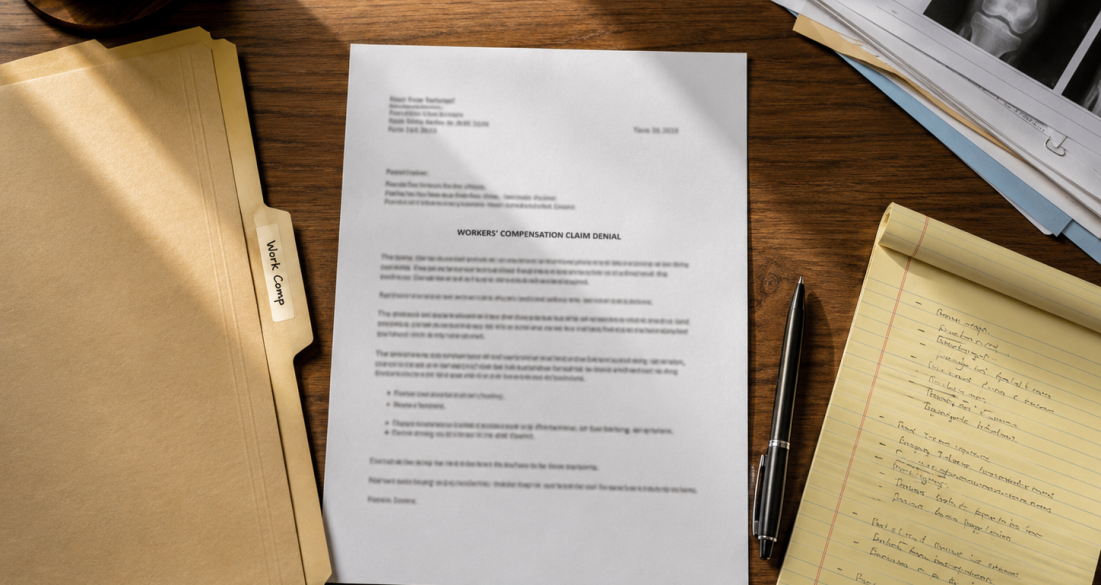
A denied Louisiana workers’ compensation claim can be appealed by filing a Disputed Claim for Compensation with the state Office of Workers’ Compensation within one year of the injury or the last benefit payment. Strong appeals combine the full insurer claims file, independent medical evidence, and witness documentation, often supported by an attorney through mediation or a formal hearing.
A denial letter from the workers’ compensation insurer is not the end of your case. What you do in the days immediately following a denial shapes your chances of recovery, and Louisiana’s workers’ compensation system provides a formal appeal track for injured workers who believe their claim was wrongly rejected.
Insurers deny workers’ compensation claims for a defined set of reasons, and each reason has a specific counter on appeal. National workers’ compensation data from Lockton Analytics shows that 67 percent of initial denials are converted to paid claims within about 12 months, but only when workers act quickly to identify the denial reason, gather the right evidence, and file the formal appeal on time. Louisiana’s strict deadlines and documentation rules reward preparation and punish delay.
At Lukov Injury Law LLC, we help injured workers across Louisiana appeal denied workers’ compensation claims. Whether your denial cited late reporting, a pre-existing condition, or insufficient medical evidence, our team knows how to evaluate the insurer’s reasoning and build the appeal that gives you the strongest chance of recovery.
Contact us today for a free consultation.
Insurance companies deny claims for specific, documented reasons. Under Louisiana law, the insurer’s denial letter must state the exact reason behind the decision, and your appeal strategy is built directly around that stated reason. The most frequent denial reasons in Louisiana include:
Read your denial letter carefully and build your response directly around the stated reason. Each category has its own evidence requirements on appeal.
You have the right to obtain the complete claims file from the workers’ compensation insurer. This file contains the adjuster’s investigation notes, every medical record the insurer reviewed, witness statements collected during the investigation, and any evidence the insurer used to support the denial.
Review everything for factual errors, missing documentation, and misrepresentations. Adjusters sometimes rely on incomplete medical histories, misdated records, or summaries that leave out evidence favorable to your case. Anything missing or inaccurate in the file becomes a point you can challenge in the appeal.
A documented opinion from a physician you choose can directly counter the findings of an insurer-selected doctor. If your denial was based on a medical review or an independent medical exam arranged by the insurer, your own treating physician’s documented assessment carries significant weight in an appeal.
The American College of Occupational and Environmental Medicine publishes evidence-based guidelines that physicians use to evaluate workplace injuries. A physician familiar with these standards produces stronger supporting documentation that aligns with how Louisiana workers’ compensation judges weigh medical evidence.
 In Louisiana, you challenge a workers’ compensation denial by filing a Disputed Claim for Compensation (Form 1008) with the Louisiana Office of Workers’ Compensation (OWC). This is the formal legal process for contesting a denial or a reduction in benefits.
Louisiana’s prescription period (the state’s legal filing deadline) generally gives you one year from the date of injury, or one year from the last payment of benefits, to file.
Missing this window permanently eliminates your right to recover benefits through the workers’ compensation system. Act quickly, even if you are still negotiating with the insurer informally.
Strong appeals rest on documented evidence. The most useful records to compile before mediation include the following:
Organize everything chronologically and keep both digital and printed copies. Adjusters and judges are far more persuaded by an organized file than by a scattered collection of records.
Louisiana workers’ compensation disputes typically proceed through mediation before reaching a formal hearing. Mediation is a structured negotiation in which both sides attempt to resolve the dispute with the help of a neutral mediator. If mediation does not resolve the issue, a workers’ compensation judge holds a formal hearing and issues a ruling.
At the hearing, evidence and witness testimony are presented under formal rules. The judge applies the Louisiana workers’ compensation law to determine whether benefits are owed and at what level. A 2024 Workers’ Compensation Research Institute study of more than 950,000 claims across 31 states found that attorney representation increased indemnity benefits by an average of $7,700 to $12,400 per claim, with the effect most pronounced in contested cases that proceed through mediation and formal hearings.
An adverse ruling at the OWC hearing level can be appealed to the appropriate Louisiana Circuit Court of Appeal. Appellate proceedings follow strict procedural rules, deadlines, and evidentiary limitations. Legal representation is essential at this stage.
Beyond the appeal track, some workers also explore civil claims against third parties whose negligence contributed to the workplace injury. These claims run outside the workers’ compensation system and can recover pain and suffering, future earnings, and other damages that the compensation system does not cover. The two tracks are independent, and a single workplace incident sometimes supports both.
A denied workers’ compensation claim can leave an injured worker facing mounting medical bills, lost wages, and pressure to accept less than they deserve. The appeal process is designed to give your claim a fair second review, but it rewards preparation, documentation, and timely action. Louisiana’s one-year prescription period closes the door on appeals that are filed too late.
At Lukov Injury Law LLC, Abby fights for injured workers across Louisiana, Texas, and Arkansas. If your workers’ compensation claim was denied, our team can review your denial letter, gather the medical and witness evidence your appeal needs, and represent you through mediation, the OWC hearing, and appellate review.
If you need a Louisiana workers’ compensation lawyer, call Abby at 319-GET-ABBY today for a free consultation, or learn more about Abby’s background and how we approach denied claims.
Disclaimer: This article provides general information and should not be treated as legal advice. Laws change over time, and outcomes depend on the specific facts of each case. No attorney-client relationship is created by reading this article or contacting Lukov Injury Law LLC. For advice about your situation, contact a qualified attorney. Time limits apply to workers’ compensation claims in Louisiana, so do not delay in seeking legal help.
Louisiana’s workers’ compensation prescription period generally gives you one year from the date of injury, or one year from the last payment of benefits, to file a Disputed Claim for Compensation with the Office of Workers’ Compensation. Missing that deadline permanently eliminates your right to recover benefits through the workers’ compensation system. If a denial letter has just arrived, do not assume the clock pauses while you decide what to do.
Yes, you generally have the right to choose your own treating physician under Louisiana workers’ compensation law. A treating physician’s documented assessment of your injury and its work-relatedness carries significant weight on appeal, particularly when the original denial relied on an insurer-arranged medical exam. Keep every visit note, diagnosis, and treatment plan organized for your appeal file.
Technically no, an injured worker can file Form 1008 without an attorney. In practice, denied claims involve disputed facts, contested medical records, and procedural deadlines that benefit from legal representation. A 2024 Workers’ Compensation Research Institute study of more than 950,000 claims found that attorney representation increased indemnity benefits by an average of $7,700 to $12,400 per claim, with the largest gains in cases involving permanent partial disability or lump-sum settlements.
A disputed work connection is one of the most common reasons Louisiana workers’ compensation claims are denied. Strong appeals counter this with coworker statements, accident-site photographs, medical documentation matching the injury timeline, and any incident report filed at the time. If your employer recorded the injury and the insurer still denied the claim, that paperwork becomes powerful evidence on appeal.
You may have a separate civil claim against any third party whose negligence contributed to your workplace injury, even if your workers’ compensation claim is denied. These third-party claims run outside the workers’ compensation system and can recover pain and suffering, lost future earnings, and other damages not available through workers’ compensation benefits. The two tracks are independent, and a single workplace incident may support both.