Licensed in Louisiana, Texas, and Arkansas
Licensed in Louisiana, Texas, and Arkansas

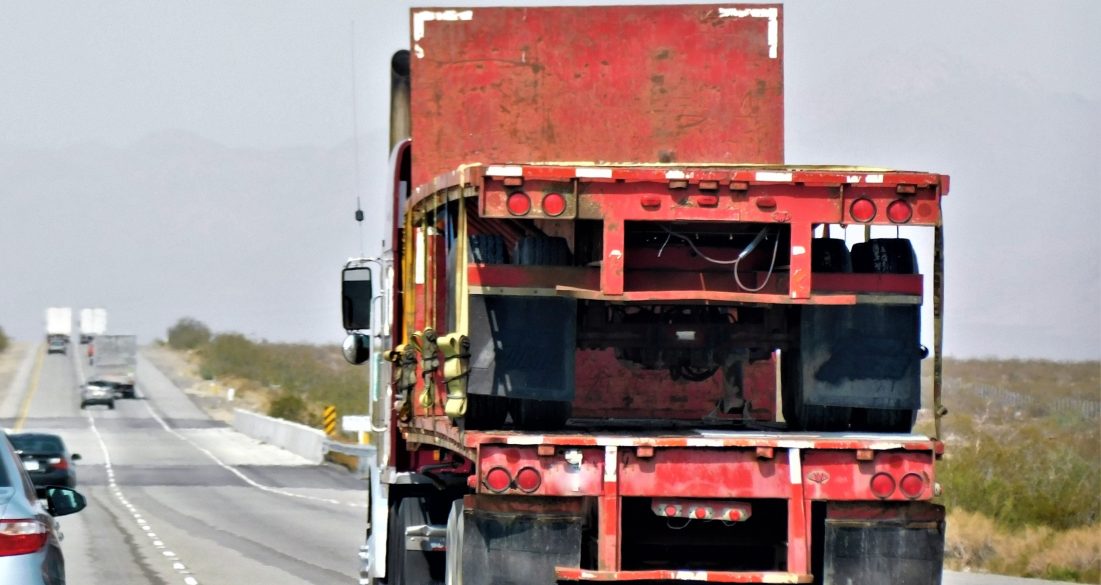
A Louisiana truck claim and a Louisiana car claim start from the same legal test, but almost everything downstream is different. A truck operates under federal regulations that do not apply to passenger vehicles, the records of those regulations expire on fixed schedules, and there can be more than one party who can be held responsible. The differences change what has to be gathered, how fast, and from whom.
The same collision, with a car on one side and a tractor-trailer on the other, produces two different claims. Knowing which one you have changes what happens in the first weeks.
At Lukov Injury Law, we treat a truck claim as its own category rather than a larger car claim.
The comparison below runs across the points that actually diverge. Contact us today to talk through which one applies to you.
This is the first and largest difference. A passenger vehicle is governed by state traffic law. A commercial truck is governed by state traffic law and by the Federal Motor Carrier Safety Regulations in Title 49 of the Code of Federal Regulations.
Those federal rules set out specific obligations:
The practical effect is that part of the duty question is already answered before anyone argues about it. In a car claim, the standard is reasonable care, which is a judgment. In a truck claim, a portion of that standard is written down.
A car claim works from a police report, photographs, medical records, and witness accounts. A truck claim has those plus a regulatory record set.
That extra record set is the advantage in a truck claim. The retention floors are the cost of it, because the shortest of them is three months.
A written request does not by itself obligate a carrier in Louisiana to hold on to anything, so the working protection in a truck claim is time rather than paperwork. A car claim does not face the same clock.
 In a car claim, the answer is the other driver, and behind them, their insurer.
A truck claim can involve more:
Having more potential parties is not automatically better. It means more work establishing who did what and more parties with an interest in pointing at someone else.
Physics accounts for a real part of the difference. A loaded tractor-trailer carries far more kinetic energy than a passenger car at the same speed, because energy rises with mass and with the square of speed.
More energy transferred into a smaller vehicle means greater force on its occupants. That affects the medical picture, the treatment timeline, and the way future needs have to be documented.
Where a head injury is involved, the documentation requirements become their own subject and are handled separately.
Yes. This is the point where the two claims converge again.
Louisiana sets a two-year prescriptive period for most personal injury claims, running from the day the injury is sustained. Injuries occurring before July 1, 2024, fall under the older one-year period.
Under Civil Code article 2323 as amended by Act 15 of 2025, effective January 1, 2026, a person found 51 percent or more at fault recovers nothing, and a lower share reduces the award proportionally. Incidents before that date remain under the older pure comparative fault system.
The rules are identical. The difference is that a truck claim has more evidence available to argue the fault percentage with, and less time to collect it.
The distinction is not about vehicle size alone. It turns on whether the vehicle was a commercial motor vehicle operating under federal regulation, which is a question of weight, use, and interstate operation rather than appearance.
A delivery van, a box truck, a logging truck, and a tractor-trailer can all fall inside the federal scheme depending on the facts, which is why commercial motor vehicle claims are treated as their own category rather than as larger car claims.
The difference between a car claim and a truck claim shows up in the first weeks rather than at the end, because the truck records start expiring at three months. At Lukov Injury Law, we identify which claim is in front of us before anything else.
Abby Lukov will tell you which category your claim falls into, and that first conversation costs nothing. Contact us or call us today at 504-315-5056 to talk through what happened and what that changes.
Disclaimer: This article provides general information and should not be treated as legal advice. Laws change over time, and outcomes depend on the specific facts of each case. No attorney-client relationship is created by reading this article or contacting Lukov Injury Law LLC. For advice about your situation, contact a qualified attorney. Time limits apply to legal claims, so do not delay in seeking legal help.
Value depends on the facts of the individual case, including the injuries, the losses documented, and the fault percentages assigned. What differs structurally is that a truck claim has a federal record set available and can involve more than one responsible party, both of which affect how a claim is built rather than setting its value.
The Federal Motor Carrier Safety Regulations in Title 49 of the Code of Federal Regulations. Among the sections that bear on a truck claim, 49 CFR 395.3 sets driving-hour limits, 396.3 requires systematic inspection, repair and maintenance, and 396.17 requires a periodic inspection at least once during the preceding 12 months.
The regulations bind the motor carrier as well as the driver, and the carrier’s own decisions around hiring, training, supervision, dispatch, and maintenance can form a separate basis for a claim. Whether both are appropriate parties in a given case depends on the facts and should be reviewed with an attorney.
Timelines depend on the complexity of the case, the injuries involved, and how contested fault is. A truck claim can involve more parties and more records, which adds work, while a car claim with clear liability and modest injuries has fewer moving parts.
The same as for a car accident claim. Louisiana sets a two-year prescriptive period for most personal injury claims, running from the day the injury is sustained. Injuries before July 1, 2024, fall under the older one-year period, and deadlines vary by claim type.
Because they exist and they expire. A car claim has no comparable regulatory paper trail. A truck claim has driving-hour records, inspection reports, and maintenance files, but the shortest of those is retained only three months under 49 CFR 396.11, and duty-status records run six months under 395.8(k)(1).
No. The same rule applies to both. Under Civil Code article 2323 as amended by Act 15 of 2025, effective January 1, 2026, a person 51 percent or more at fault recovers nothing, and a lower share reduces the recovery proportionally. Incidents before that date remain under pure comparative fault.
It turns on whether the vehicle was a commercial motor vehicle operating under federal regulation, which depends on weight, use, and whether the operation was interstate, rather than on how large the vehicle looked. A delivery van or box truck may fall inside the federal scheme depending on the facts.