
Licensed in Louisiana, Texas, and Arkansas
Licensed in Louisiana, Texas, and Arkansas
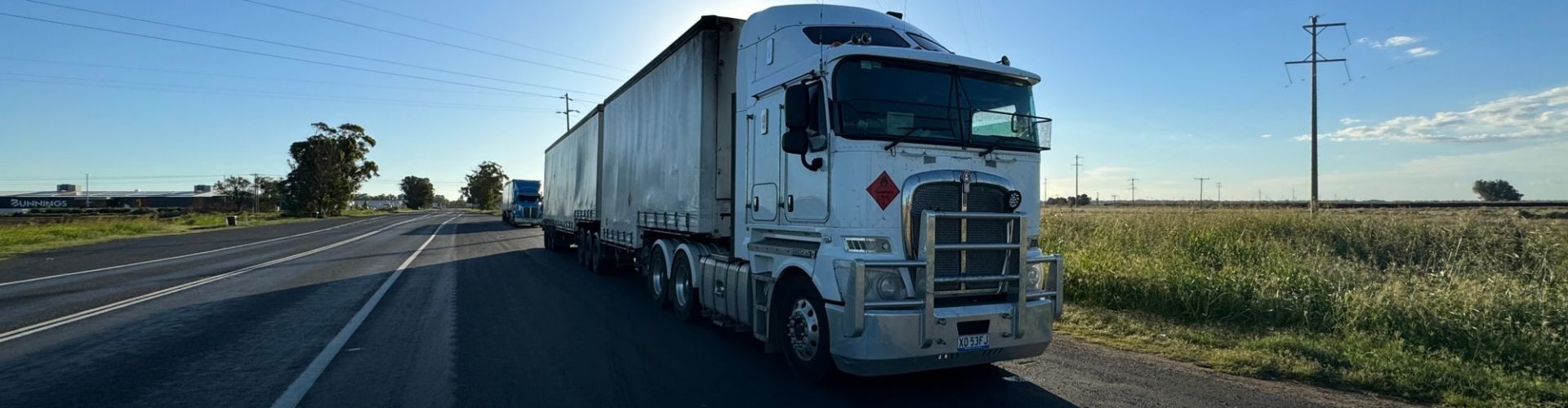
The first few minutes after a commercial vehicle hits your car look like any other collision. There are two damaged vehicles, a call to 911, and an officer taking statements. What sets the crash apart is what starts happening behind the other driver once the scene clears.
When a commercial vehicle hits your car in Louisiana, federal rules can require the driver to be tested for alcohol and controlled substances within hours and the carrier to record the crash in an accident register kept for 3 years. The carrier’s insurer may also contact you. Neither the testing rule nor the accident register applies when two private drivers collide.
At Lukov Injury Law, we look first for the carrier behind the driver and the records the crash set in motion.
This guide covers the scene, the federal testing rules, the carrier’s accident register, the insurer’s first contact, and the limits Louisiana places on suing an insurer directly. Contact us today to talk through your crash and the testing and accident records it may have produced.
The first steps match any collision. Get to safety, then call for police and medical help. Getting checked by a medical provider matters even when an injury seems minor, because the record of that visit becomes part of how the injury is later shown.
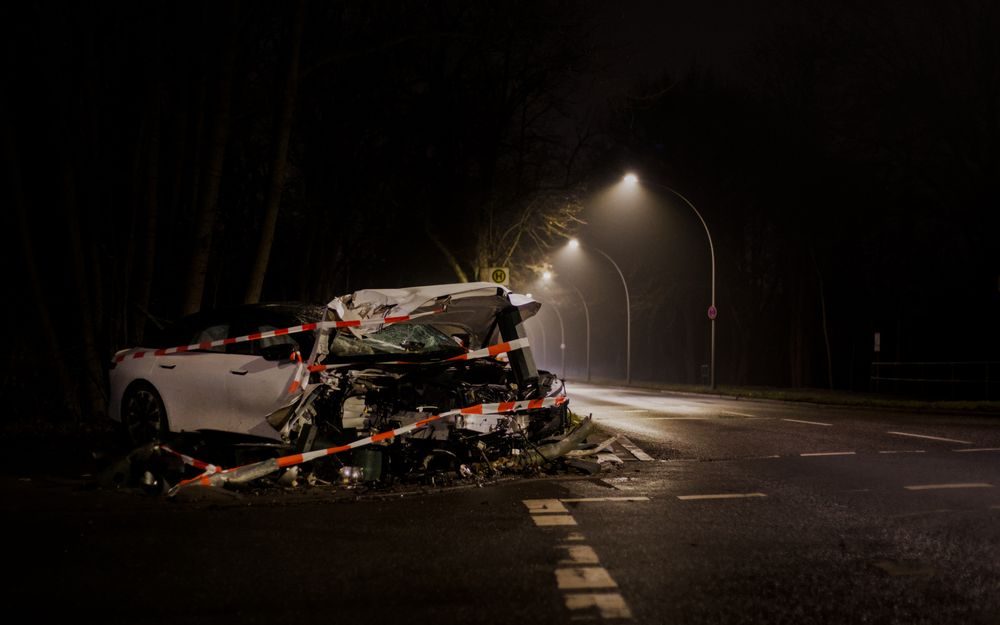 An investigating officer can prepare a written accident report. It records the vehicles, the drivers, the location and the officer’s observations. The report is evidence, not the final word on fault. Fault is allocated later under Louisiana Civil Code article 2323, which quantifies the fault of every person involved, whether or not that person is a party.
With a commercial vehicle, the officer’s report connects to a second set of records. Federal rules require the carrier to keep copies of accident reports required by state or other governmental entities, so the document the officer prepares can end up in the carrier’s own file as well as in yours.
The details worth noting at the scene are the ones that identify the operation rather than only the driver. That means the company name on the door, any numbers painted on the cab or the body, the trailer if there is one, and the names of anyone who saw the collision. A commercial vehicle can display one company’s name while operating under another, and those markings help sort that out later.
The kinds of vehicles that bring a crash into this category are explained on our commercial motor vehicle page.
This is one of the clearest differences between a commercial crash and an ordinary one. Under 49 CFR 382.303, post-accident testing for alcohol and controlled substances is required in defined situations, and it is to be carried out “as soon as practicable.” The duty comes from the driver’s place in a motor carrier operation, not from anything the other motorist does.
The rule sets out three situations that call for testing:
The citation carries real weight. In the two situations without a death, the test turns on the officer issuing a moving violation citation to the commercial driver. That ties the police response at the scene to the federal record that follows.
The rule runs on two clocks. Alcohol is tied to an 8 hour window, and controlled substances are tied to a 32 hour window. The same windows limit both when the triggering citation can be issued and how long attempts to test the driver can continue.
If the alcohol test is not given within 2 hours, a record of the reasons is kept. If the test still has not happened by 8 hours, attempts to give it stop. Attempts to test for controlled substances stop at 32 hours.
For a claim, the questions are practical. Was a test required under the rule? Was it carried out inside the window? If it was late, what reason does the record give? Each answer points to a document worth requesting.
Whether these testing rules reached the particular driver is a threshold question to confirm rather than assume. A test result also answers only one question. A clean result does not mean the driver was free of fault, and a positive result is evidence to weigh alongside everything else rather than a finding on its own.
A motor carrier has a recordkeeping duty after a crash that the other driver in a two-car collision would not. Under 49 CFR 390.15(b), “Motor carriers must maintain an accident register for 3 years after the date of each accident.”
For each accident, the register records:
That last entry links the register to the scene. The police report, and any reports the carrier’s insurers required, belong in the same file as the register entry for your crash.
Under 49 CFR 390.15(a), carriers must make accident records available to the Federal Motor Carrier Safety Administration, to authorized state or local enforcement, and to authorized third-party representatives. The same section calls for “a full, true, and correct response.”
An injured driver is not named on that list. In a claim, the register and the reports filed with it are sought through the formal claim and litigation process rather than through a phone call to the carrier.
Three years is a longer window than several other carrier record periods, so the register can outlast the documents that sat beside it. It does not replace them. The shorter-lived records, such as duty status and inspection files, still call for early action.
After a commercial vehicle crash, the call may come from the carrier’s insurer, a claims administrator, or an adjuster acting for the carrier. Whoever calls works for the insured side. Their task is to evaluate the claim against the party they cover, and the information you give becomes part of that evaluation.
A request for a recorded statement is the point to slow down. What you say about speed, distance, where you were looking and how you feel can be used to assign you a share of the fault. Under Civil Code article 2323, a recovery is reduced in proportion to the injured person’s share of negligence, and a share at or above the threshold set in that article bars recovery entirely. That version of the article took effect on January 1, 2026, so for an earlier crash the version that applies should be confirmed with a lawyer.
Statements about injury carry their own risk. A description given before treatment is complete reflects only how you felt on that day, and it can be quoted back later as if it were the whole picture.
None of this means refusing to share basic information such as names, vehicles and insurance details. It means treating a recorded statement, a signed release or a medical authorization as a decision to make with a lawyer rather than during the first phone call.
Your own insurer is a separate relationship. Reporting the crash to your own company is a matter of your policy terms, and a conversation with the carrier’s insurer does not take its place.
Not in the ordinary case. Louisiana’s direct action statute, La. R.S. 22:1269, provides that the injured person “shall have no right of direct action against the insurer unless at least one of the following applies.” The claim runs against the driver and the carrier, with the insurer standing behind them.
The statute lists seven exceptions:
Two further rules shape how a case looks in court. The insurer is kept out of the caption of the suit, and the existence of insurance is not disclosed to the jury. The statute also allows the insurer to be joined after a verdict or a settlement.
In practical terms, the adjuster who calls you represents a company you cannot, in the ordinary case, name as a defendant at the start, even though that company may be the one evaluating the claim against its insured.
Both kinds of claim start from the same principle. Civil Code article 2315 provides that “Every act whatever of man that causes damage to another obliges him by whose fault it happened to repair it.” What changes is everything built around that principle.
The injury and damage questions for your own car can look similar to an ordinary crash. Our page on car wrecks covers collisions between private drivers, and the contrast with a commercial crash lies in the investigation rather than the injury.
When the vehicle that hit you is a tractor-trailer, the same steps apply with added issues that those rigs raise, which our 18-wheeler crash page addresses.
Timing rules run in parallel with all of this. Civil Code article 3493.1 provides that “Delictual actions are subject to a liberative prescription of two years. This prescription commences to run from the day that injury or damage is sustained.” That article took effect July 1, 2024, and the period for an injury sustained before that date should be confirmed with a lawyer.
A commercial vehicle crash creates obligations on the carrier’s side within hours and records that remain in its files for years. At Lukov Injury Law, we identify the carrier, confirm which federal rules reached the driver, and request the testing and accident records while they can still be traced.
You work directly with Abby Lukov, not a case manager, and the first conversation costs nothing. Call us today to talk through what happened and which carrier records to request first.
When a commercial vehicle hits your car in Louisiana, the scene can look like any crash, with police, medical care and a written accident report, but federal rules then place duties on the driver and the carrier that a car crash does not. Those rules can require post-accident alcohol and controlled substance testing under 49 CFR 382.303, and the carrier must keep an accident register for 3 years under 49 CFR 390.15(b). The carrier’s insurer may also contact you about the claim, while Louisiana’s direct action statute limits when that insurer can be sued directly.
Where the federal testing rules apply, the driver is tested for alcohol and controlled substances after an accident involving a death. Testing is also required when the driver is cited for a moving violation and the accident involved immediate medical treatment away from the scene or disabling damage requiring a tow. The carrier then records the accident in its register along with copies of the required accident reports.
Testing is to be carried out as soon as practicable. If the alcohol test is not given within 2 hours, a record of the reasons is kept, and attempts stop at 8 hours. Attempts to test for controlled substances stop at 32 hours.
Under 49 CFR 390.15(b), a motor carrier must maintain an accident register for 3 years after the date of each accident. The register lists the date, place, driver name, injuries, fatalities and any hazardous materials release. It also holds copies of the accident reports required by state or other governmental entities or insurers.
No. The report is evidence prepared by the investigating officer, and it can matter a great deal, including whether the commercial driver was cited for a moving violation. Fault in a Louisiana claim is allocated under Civil Code article 2323, which quantifies the fault of every person involved.
The adjuster works for the insured side, whether the call comes from the carrier’s insurer, a claims administrator or someone acting for the carrier. Their task is to evaluate the claim against the party they cover, and what you say becomes part of that evaluation. Sharing names, vehicles and insurance details is different from giving a recorded statement or signing a release.
Not in the ordinary case. La. R.S. 22:1269 bars a direct action against the insurer unless one of seven listed exceptions applies, such as bankruptcy or insolvency of the insured, the death of the insured, or a coverage denial. The claim proceeds against the driver and carrier, and the insurer can be joined after a verdict or settlement.
No. A test answers one question about the driver, and a clean result leaves the rest of the fault question open. A positive result is also evidence to weigh with the rest of the record rather than a finding by itself. Fault is allocated among everyone involved under Civil Code article 2323.
Disclaimer: This article provides general information and should not be treated as legal advice. Laws change over time, and outcomes depend on the specific facts of each case. No attorney-client relationship is created by reading this article or contacting Lukov Injury Law LLC. For advice about your situation, contact a qualified attorney. Time limits apply to legal claims, so do not delay in seeking legal help.
