Licensed in Louisiana, Texas, and Arkansas
Licensed in Louisiana, Texas, and Arkansas
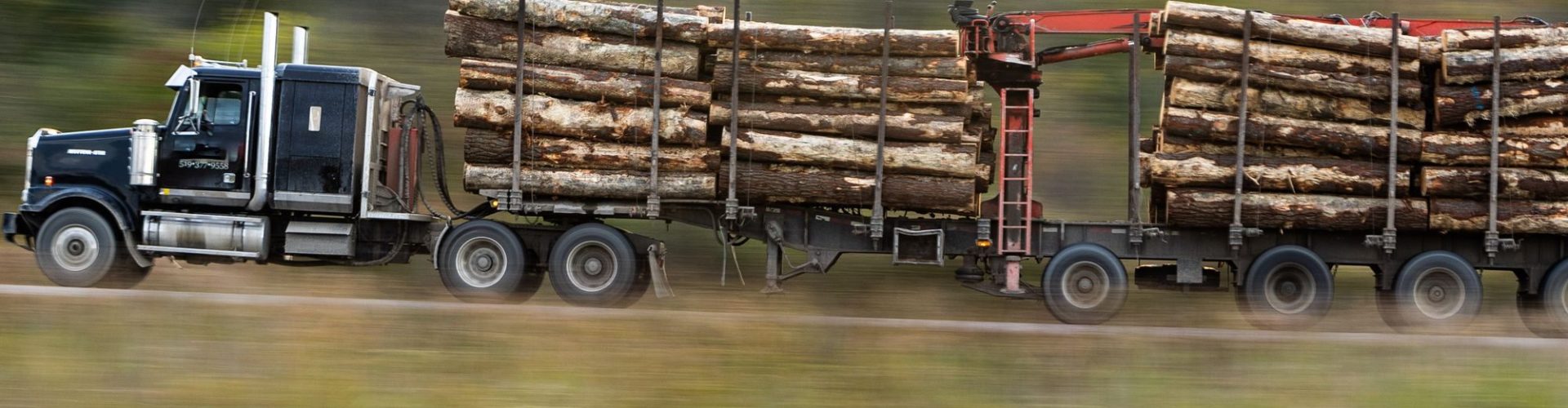
A logging truck crash does not come with a single explanation that announces itself at the scene. The truck may have been heavy, the load may have moved, a part may have failed, or the driver may have been worn down by the hours behind the wheel. More than one of those can be true at once.
Each of those causes leaves a different trail. Weight shows up in paperwork, equipment failure shows up in the vehicle and its maintenance file, and fatigue shows up in the driver’s records. Knowing which cause is in play tells you which records and which parts of the truck matter.
At Lukov Injury Law, we treat the cause of a logging truck crash as a question to be answered with evidence, not assumed from the wreckage.
The sections below walk through the causes that come up in Louisiana logging truck crashes and the evidence each one can leave behind. Contact us today to talk through your crash and what can still be found.
Logging truck accidents in Louisiana trace to five groups of causes: load weight, load movement, equipment and maintenance, driver fatigue, and road and site conditions. Each group points to a different body of evidence.
None of these is a finding of fault on its own. Louisiana’s general rule, in La. C.C. art. 2315(A), is that “Every act whatever of man that causes damage to another obliges him by whose fault it happened to repair it.” The cause of the crash is what connects a particular act, or a particular failure to act, to a particular person or company.
Weight changes the physics of a truck. A heavier vehicle needs more distance to stop, carries more energy into a collision, and puts more strain on its brakes, tires and suspension. Louisiana sets weight limits for trucks, and loads of forest products have their own entry in them.
La. R.S. 32:386(A) provides: “The total gross weight of any vehicle or combination of vehicles shall not exceed eighty thousand pounds, and no vehicle or combination of vehicles shall exceed its licensed gross weight.” The second half of that sentence matters as much as the first, because a truck can be under the general limit and still be over what it was licensed to carry.
The same statute sets limits for individual axles. For a tandem axle, La. R.S. 32:386(D) adds: “However on any vehicle carrying forest products in their natural state, the weight limitation shall be thirty-seven thousand pounds per tandem axle”. Subsection (K) requires that vehicles “shall be loaded in such manner that the axle limitations … are not exceeded”, so how the logs were placed on the trailer is part of the weight question, not only how much they weighed in total.
Louisiana also provides special harvest season permits under La. R.S. 32:387(B)(3) for vehicles transporting farm and forest products in their natural state, with their own gross and axle limits. Whether a permit was issued, and what it allowed, is one of the first things to establish before calling a load overweight.
An overweight load is evidence that bears on fault. It does not decide the case by itself. The question remains whether the excess weight played a part in how the crash happened, such as a longer stopping distance or a part that failed under the extra load. The evidence that speaks to weight may include the load paperwork, any weight recorded where the logs were picked up or delivered, and the permit file if one existed.
Logs are round, heavy and carried in the open. When a load moves, the truck’s center of gravity moves with it, and a driver who entered a curve with a balanced load can find the trailer leaning partway through it.
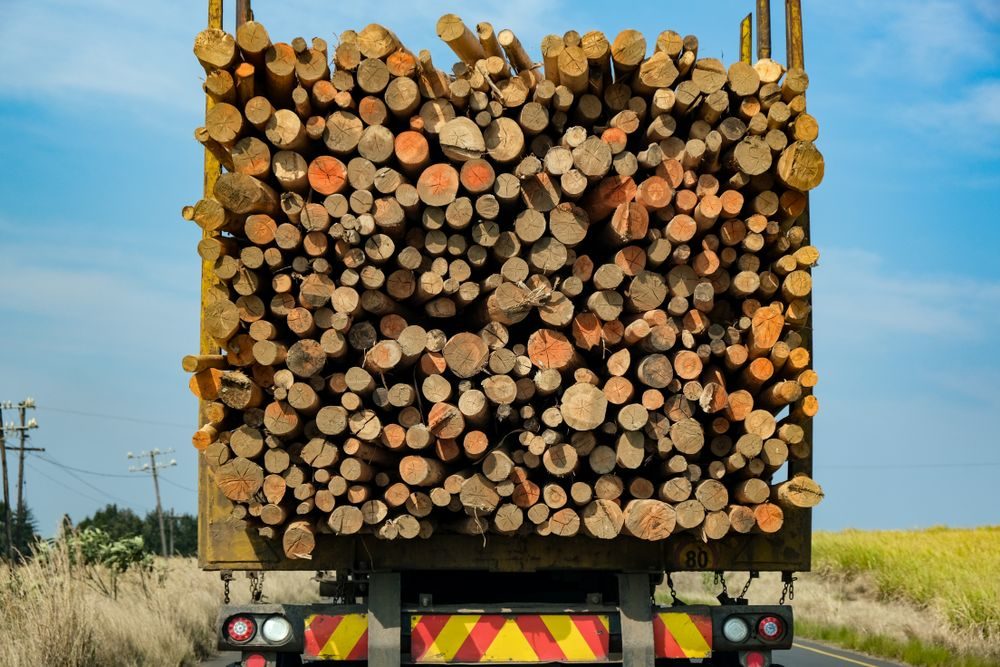 A shifting load can contribute to a crash in several ways. It can push the truck toward a rollover in a turn, pull it out of its lane under braking, or release timber onto the road if the movement is severe enough. A load can also shift enough to change how the truck handled without any log leaving the trailer, which is why a crash with no spill still raises the load question.
The federal securement rules for logs, from tiedowns to stacking, are their own subject and are covered on our logging truck crash page. The point here is the evidence a shift leaves behind.
That evidence is time sensitive. Once the logs are cleared and the truck is moved, the arrangement of the load at the moment of the crash cannot be photographed again.
A logging truck works hard. It travels unpaved roads into harvest sites, carries heavy loads over rough ground, and returns to the highway with the same parts that took that strain. Federal regulations place the duty to keep those parts in working order on the motor carrier.
Under 49 CFR 396.3(a), every motor carrier must “systematically inspect, repair, and maintain” the vehicles subject to its control. Parts and accessories must be “in safe and proper operating condition at all times”, and the regulation names components that include the frame, suspension, axles, wheels and rims, and steering. The word “systematically” points to a program, not a repair made only after something breaks.
Under 49 CFR 396.17(a), every commercial motor vehicle must be periodically inspected, and each vehicle in a combination is inspected separately. For a logging rig, that means the tractor and the log trailer each carry their own inspection question.
The truck is evidence. A failed part may still be on the vehicle, and its condition can show whether it wore out over time, broke under a load it was not built for, or was defective from the start. That distinction matters because it can point to different parties, from the carrier that maintained the truck to the company that built the part. The maintenance file, the inspection records and the part itself are read together. The part has to be preserved before the truck is repaired, scrapped or returned to service.
Yes. Fatigue slows reaction time and dulls judgment, and on a narrow road with a heavy load there is little margin for either. Federal regulations treat fatigue as a safety condition in its own right, separate from any count of hours.
The regulation at 49 CFR 392.3 bars a driver from operating a commercial motor vehicle, and bars a carrier from requiring or permitting it, “while the driver’s ability or alertness is so impaired, or so likely to become impaired, through fatigue, illness, or any other cause, as to make it unsafe”. The rule reaches the carrier as well as the driver. A company that sent out a driver it knew was exhausted faces its own question under that language.
The federal hours-of-service limits set a separate outer boundary on driving time, and they can also matter in an 18-wheeler crash claim. A driver can be inside those limits and still be too fatigued to drive safely, which is why 392.3 matters on its own terms.
The evidence of fatigue may include the driver’s records of duty status, electronic logging data, the trip schedule, the times of pickups and deliveries, and any fuel or other receipts that place the truck at particular points during the day. Taken together, those records can show how long the driver had been working and whether the schedule left room for rest.
A logging truck’s route can run far from the interstate. Timber is cut in the woods and hauled over parish roads and two-lane state highways to mills and yards, and the roads themselves shape how crashes happen.
Road conditions do not remove the question of fault. They can bring other people’s conduct into it, such as another driver’s speed or a decision to pass, or the way an entrance was managed.
Under La. C.C. art. 2323, the fault of every person involved is quantified, whether or not that person is a party to the claim. A share assigned to the injured person reduces what can be recovered, and at the level the article sets, it bars recovery. That version of the article took effect on January 1, 2026, so for an earlier crash the version that applies should be confirmed with a lawyer. Where a crash on one of these roads ends in a death, our page on wrongful death explains how those claims are brought.
A logging truck crash is explained by its causes, and each cause is proved through a different set of records, parts and scene details. At Lukov Injury Law, we identify which causes are in play, then move first on the evidence that disappears fastest, such as the load arrangement, the failed part and the scene itself.
You work directly with Abby Lukov, not a case manager, and the first conversation costs nothing. Call us today to talk through what happened and which records and parts can still be examined.
Common causes of logging truck accidents in Louisiana fall into five groups: load weight, load movement, equipment and maintenance failures, driver fatigue, and road and site conditions. Each one leaves its own evidence, from load paperwork and maintenance files to duty records and the scene itself.
A heavier truck needs more distance to stop, carries more energy into a collision and puts more strain on its brakes, tires and suspension. How the logs sit over the axles also changes how the truck handles under braking and in a curve. Whether a load was overweight is measured against Louisiana’s weight statutes and any harvest season permit the truck carried.
Yes. A heavy load, a worn part and a tired driver can all play a part in the same crash, and each cause can point to a different person or company. Each one is traced through its own records and physical evidence, so the investigation follows every cause in play rather than stopping at the first one found.
A loaded truck leaving a woods road joins highway traffic at low speed, and a truck braking to turn in can catch a following driver off guard. Mud and bark carried out of the site can also reduce traction near the entrance. The sight lines at that spot and the final positions of the vehicles are part of the evidence.
Yes. A brake, tire, wheel or steering part that wears past safe use can fail under a heavy load on rough ground. The failed part itself can show whether it wore out, broke under load or was defective from the start, so it has to be preserved before the truck is repaired.
It can. A load that moves shifts the truck’s center of gravity, even when no log leaves the trailer. That shift can contribute to a rollover or a lane departure. Photographs of the load position taken before the logs are cleared are among the clearest evidence of what happened.
Logging trucks travel narrow parish roads and two-lane highways, and they enter and leave traffic at harvest site entrances. Those roads leave little room to correct, and other drivers may try to pass a slow, loaded truck. The conduct of everyone involved can be part of the fault question under Louisiana law.
Photographs of the load and the trailer before the logs are removed, the names of witnesses, and the identity of the truck and its carrier come first. The failed part, if one is suspected, has to be preserved before the truck is repaired or returned to service. Load paperwork, maintenance files and duty records can then be requested from the parties who hold them.
Disclaimer: This article provides general information and should not be treated as legal advice. Laws change over time, and outcomes depend on the specific facts of each case. No attorney-client relationship is created by reading this article or contacting Lukov Injury Law LLC. For advice about your situation, contact a qualified attorney. Time limits apply to legal claims, so do not delay in seeking legal help.