Licensed in Louisiana, Texas, and Arkansas
Licensed in Louisiana, Texas, and Arkansas


To prove negligence in a Louisiana wrongful death case, a family has to show four things: the at-fault party owed a duty of care; breached that duty; caused the death; and that real damages resulted. The standard is more likely than not, not beyond a reasonable doubt. Louisiana’s comparative fault rule can reduce recovery if the person who died shared part of the blame.
Winning a wrongful death case is not about how tragic the loss was, as painful as that truth is. It is about proving that another party’s negligence caused the death, using evidence that holds up under pressure from an insurance company.
That proof follows a clear structure, and understanding it helps a family see what the case will actually require. At My Lawyer Abby, the personal injury practice of Lukov Injury Law LLC, we build the proof of negligence step by step so a New Orleans family is not left guessing what comes next.
This guide walks through the four elements of negligence and the steps that turn them into a provable case. Contact us today to ask what proving fault might look like in your family’s situation.
Negligence is the legal idea that someone failed to act with the care a reasonable person would have used. To win, a family has to prove four connected elements, and a weak link in any one of them can sink the case.
The standard of proof is lighter than in a criminal case. A family has to show that negligence is more likely than not, rather than proving it beyond a reasonable doubt.
The four elements also work as a chain, because each one leans on the one before it. A strong case proves all four together, so that duty, breach, causation, and damages tell a single connected story.
Proving negligence in a Louisiana wrongful death case also runs on a different clock than a criminal matter. The family, through the personal representative or surviving relatives, brings the claim as a civil action, and the goal is fair compensation rather than punishment. That framing shapes every choice that follows, from the evidence we gather to the way we present each element to an insurer or a jury.
The first job is to establish that the at-fault party owed your loved one a duty to act safely. Most duty questions are straightforward, because the law already sets the standard in many everyday situations.
Once the relationship is clear, the duty usually follows from it. In plain terms, the law often answers the duty question before the case even begins, which is why this step is rarely the hardest one. We identify the exact duty that applied so the rest of the case has a firm foundation.
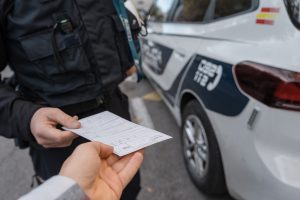 A duty alone proves nothing without showing the party fell short of it. A breach is the moment the at-fault party did something a careful person would not have done or failed to do something a careful person would have.
Proving a breach usually means reconstructing what the party actually did. The evidence that shows it can come from several sources at once.
The goal is to show a clear gap between what the party should have done and what they did. We gather these sources early, before they are lost or overwritten.
Causation is often where wrongful death cases are won or lost. It is not enough that the party was careless, because the family has to connect that carelessness directly to the death.
Insurers frequently argue that something else caused the death, such as a pre-existing condition or a third party. Answering that argument takes evidence that ties the breach to the fatal outcome.
When the link is shown clearly, the defense has far less room to shift blame elsewhere. We focus heavily on this element because it carries the most weight.
Causation in Louisiana also asks two related questions, and both have to hold up. The first is whether the death would have happened without the breach, and the second is whether the death was a foreseeable result of that conduct. Sorting out these questions early helps a family understand which facts the case turns on, and it tells us where to put the most effort as the proof comes together.
The final element is proof that the death caused real, measurable losses. Without documented damages, even a clear case of fault may recover little.
Damages in a wrongful death case fall into two groups, one looking at the family and one at the deceased. Each is supported by its own kind of proof.
We document each category so the full weight of the loss is visible. The stronger the records, the harder it is for an insurer to discount the claim.
Non-economic losses like companionship and guidance take more care to prove than a stack of bills. We help a family show what the person meant to them in a way a jury can understand and value.
 Evidence does not wait for a family to be ready. Vehicles get repaired, video is recorded over, and memories fade, so acting early can decide whether key proof still exists.
Some of the most important evidence has a short shelf life. Moving quickly protects the case in ways that cannot be fixed later.
A formal request to preserve evidence can stop a company from destroying records. We send those requests quickly so the proof of negligence stays intact.
Once a request is on file, destroying that evidence can carry its own consequences for the other side. That pressure often makes a company hold on to the very records that prove what happened.
Louisiana follows a modified comparative fault rule, effective January 1, 2026. If the person who died is found partly at fault, the recovery is reduced by their share, and a share of 51 percent or more can bar recovery entirely.
Insurance companies use this rule as a weapon, shifting as much blame as they can onto the person who died. Proving negligence includes defending against that tactic.
Keeping the fault percentage fair can change the value of a case by a wide margin. Because the rule reduces recovery dollar for dollar with each point of fault assigned to the person who died, even a modest shift in that number carries real weight for the family. We handle Louisiana wrongful death claims where fault is contested, often after fatal car accidents or 18-wheeler collisions.
Proving negligence is a process of connecting duty, breach, causation, and damages with evidence that an insurer cannot easily dismiss. At My Lawyer Abby, we build each element from the ground up so your family’s case rests on proof rather than hope.
You work directly with Abby, not a case manager, and the first conversation is a free case review. Call us today to find out what proving fault could look like for your family.
Disclaimer: This article provides general information and should not be treated as legal advice. Laws change over time, and outcomes depend on the specific facts of each case. No attorney-client relationship is created by reading this article or contacting Lukov Injury Law LLC. For advice about your situation, contact a qualified attorney. Time limits apply to legal claims, so do not delay in seeking legal help.
The four elements are duty, breach, causation, and damages. A family has to show the at-fault party owed a duty of care, breached that duty, that the breach caused the death, and that real losses followed. All four have to be proven for a negligence claim to succeed in Louisiana.
The burden is a preponderance of the evidence, which means showing that negligence is more likely than not. This is a lighter standard than the criminal “beyond a reasonable doubt” rule. A family does not need certainty, only enough credible evidence to tip the scales past fifty percent.
Causation is proven by connecting the at-fault party’s breach directly to the death. Medical records, professional testimony, and accident reconstruction are common tools. The goal is to rule out other explanations, such as a pre-existing condition, and show the breach was a real cause of the fatal outcome.
Common evidence includes police reports, video footage, witness statements, medical records, maintenance or driver logs, and professional testimony. Physical evidence like a vehicle or product matters too. Because much of this evidence can disappear, gathering and preserving it early is one of the most important steps in a case.
Yes. Louisiana follows a modified comparative fault rule, effective January 1, 2026. A recovery is reduced by the deceased’s share of fault, and a share of 51 percent or more can bar recovery entirely. Insurers often try to shift blame, so how fault is proven can change the value of a case.
It depends on the facts, the evidence, and whether the case settles or goes to trial. Some claims resolve in months once liability is clear, while contested cases can take a year or more. Building the proof carefully usually matters more than speed, because a rushed case can settle for too little.
Often, yes. Professionals in accident reconstruction, medicine, or economics help explain causation and damages in terms a jury can follow. Not every case needs one, but in contested claims, a qualified witness can be the difference between a clear explanation of fault and a confusing one.
A denial is common and does not end the claim. It usually means the dispute moves toward negotiation or a lawsuit, where the evidence is tested. A strong, well-documented case gives a family a stronger position, because the insurer has to weigh the risk of a trial against settling fairly.