
Licensed in Louisiana, Texas, and Arkansas
Licensed in Louisiana, Texas, and Arkansas


A claims adjuster works for the insurance company, not for you. After a Louisiana crash, you can decline a recorded statement to the other driver’s insurer, limit a medical authorization to records tied to the crash, and wait until treatment concludes before considering an offer. Anything you say early becomes part of the file, so accuracy matters more than speed.
The call usually comes within days, and the voice on the other end is friendly and organized. That tone is real, but so is the fact that the person calling is paid by the company that will write the check.
Most people answer every question because it feels rude not to. At My Lawyer Abby, the personal injury practice of Lukov Injury Law LLC, we take those calls so our clients do not have to guess what is safe to say.
This guide covers what adjusters ask, why they ask it, and what you can decline. Contact us today if an adjuster has already called and you are unsure how to respond.
An adjuster investigates the claim, sets a value on it, and works toward resolving it for the company employing them. That job can be done honestly and still run against your interests.
There are two kinds of adjusters in most crashes. Your own insurer assigns one under your policy, and the other driver’s insurer assigns another whose file is built around limiting what the company pays.
The distinction matters because your obligations differ. Your policy likely includes a cooperation clause covering your own insurer, while the other driver’s insurer has no such claim on your time.
Four requests come up in nearly every claim, and each one arrives early for a reason.
 A recorded statement means describing the crash and your injuries on the record, often within days. At that point you may not know the full extent of what is wrong.
The problem is permanence. A comment that your neck is “a little sore” before an evaluation becomes a quoted line months later when imaging shows something more serious.
In most cases, you can decline a recorded statement to the other driver’s insurer. Providing basic identifying details and the date of the crash in writing is a reasonable middle ground.
Adjusters routinely send a broad authorization form covering your entire medical history. Signed as written, it opens records that have nothing to do with the crash.
Old injuries, unrelated conditions, and years of prior visits become material for a pre-existing condition argument. That argument is one of the most common tools for reducing a claim.
A narrowed authorization, limited to records tied to this crash and this treatment period, gives the insurer what it legitimately needs. Requesting that change in writing is normal and expected.
An early offer can feel like a relief, particularly with bills arriving. It also arrives before anyone knows what the injuries actually cost.
Accepting means signing a release. Once it is signed, the claim closes for good, including for symptoms that surface afterward and treatment you have not yet had.
The number in an early offer reflects what is documented so far, not what the injury will require. Time is what turns an estimate into a real figure.
Questions about how the crash happened often sound conversational. Answers get parsed later for anything suggesting you contributed to the crash.
Common phrasing invites that reading. Saying you “didn’t see them coming” reads as an admission about attention, even when it only describes another driver’s speed.
Describing what happened factually, without characterizing your own conduct, is the safer approach. Where you are uncertain, saying so is better than filling the gap.
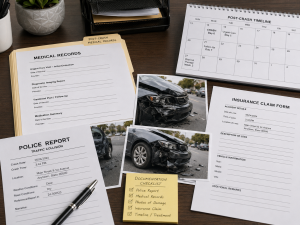 Louisiana changed the ground under these conversations. For claims governed by the rule effective May 28, 2025, the old presumption connecting a crash to a later condition no longer applies.
Causation is now proven affirmatively with medical evidence. An early statement that downplays symptoms works directly against that proof, because it becomes the insurer’s evidence that the condition came from something else.
Head injuries carry the sharpest version of this risk, since symptoms can appear well after the crash. We handle traumatic brain injury claims where an early “I’m fine” became the central dispute in the case.
Cooperation and disclosure are not the same thing. You can be entirely straightforward while still declining requests that are not obligations.
Reasonable to provide: your name, contact information, the date and location of the crash, the vehicles involved, and your insurance details. Reasonable to decline: a recorded statement to the other driver’s insurer, a blanket medical authorization, and a settlement discussion before treatment concludes.
Putting requests in writing changes the dynamic. Asking the adjuster to send questions by email creates a record, gives you time to answer accurately, and removes the pressure of an unscheduled call.
Commercial claims run differently, because carriers deploy in-house adjusters and rapid-response teams within hours. We handle commercial motor vehicle claims where that imbalance shows up on day one.
Adjuster language is professional and often technically accurate, which is what makes it easy to misread. The chart below translates the phrases that come up most.
Fault share is where the pressure concentrates, because Louisiana reduces recovery by the percentage assigned to you and bars it entirely at 51 percent or more for crashes on or after January 1, 2026. We handle Louisiana car wreck claims where the whole dispute came down to that number.
You are entitled to be careful with a company whose file exists to limit what it pays. At My Lawyer Abby, we take over the calls, the forms, and the negotiation so the record reflects what actually happened.
You work directly with Abby, not a case manager, and the first conversation costs nothing. Call us today to talk through what the adjuster has asked for and how to answer it.
Disclaimer: This article provides general information and should not be treated as legal advice. Laws change over time, and outcomes depend on the specific facts of each case. No attorney-client relationship is created by reading this article or contacting Lukov Injury Law LLC. For advice about your situation, contact a qualified attorney. Time limits apply to legal claims, so do not delay in seeking legal help.
In most cases, you are not obligated to give a recorded statement to the other driver’s insurer. Providing basic identifying information and the date and location of the crash is reasonable. Do not give details about the facts of the crash or your injuries and medical treatment – all that info can be found in the police report and later medical records. Your own policy may include a cooperation clause, which applies to your insurer rather than theirs.
Not as written, in most cases. Blanket authorizations open your entire medical history, which supports a pre-existing condition argument. Consult a lawyer before signing any medical authorization.
Do not give a recorded statement or details of what happened. Avoid characterizing your own conduct, guessing at facts, or minimizing symptoms before a medical evaluation. Phrases like “I’m fine” or “I didn’t see them” get quoted later. Describe what happened factually, and say you are uncertain rather than filling a gap.
An early offer is priced on what is documented in the first weeks, before treatment concludes and the full injury picture is known. Accepting requires signing a release that closes the claim permanently, including for symptoms and treatment that come afterward.
Photos and posts from the period after a crash are routinely reviewed and can be read very differently in a claim file than among friends. A picture at a family event says nothing about pain levels, but it can be presented as if it does.
A recorded statement does not end a claim. It becomes part of the record, and inconsistencies with later medical findings will be raised. Reviewing what you said, alongside your medical documentation, is the practical next step before further contact.
No. An adjuster assigns a fault position for the company’s own file, and it reflects that company’s view. Fault is ultimately decided on the evidence, and an adjuster’s percentage can be disputed with scene documentation, witness accounts, and vehicle data.
Yes, in most cases. Louisiana reduces recovery by your percentage of fault, and for crashes on or after January 1, 2026, bars recovery entirely at 51 percent or more. A share below that still allows a reduced recovery, and the percentage itself can be challenged.
