Licensed in Louisiana, Texas, and Arkansas
Licensed in Louisiana, Texas, and Arkansas

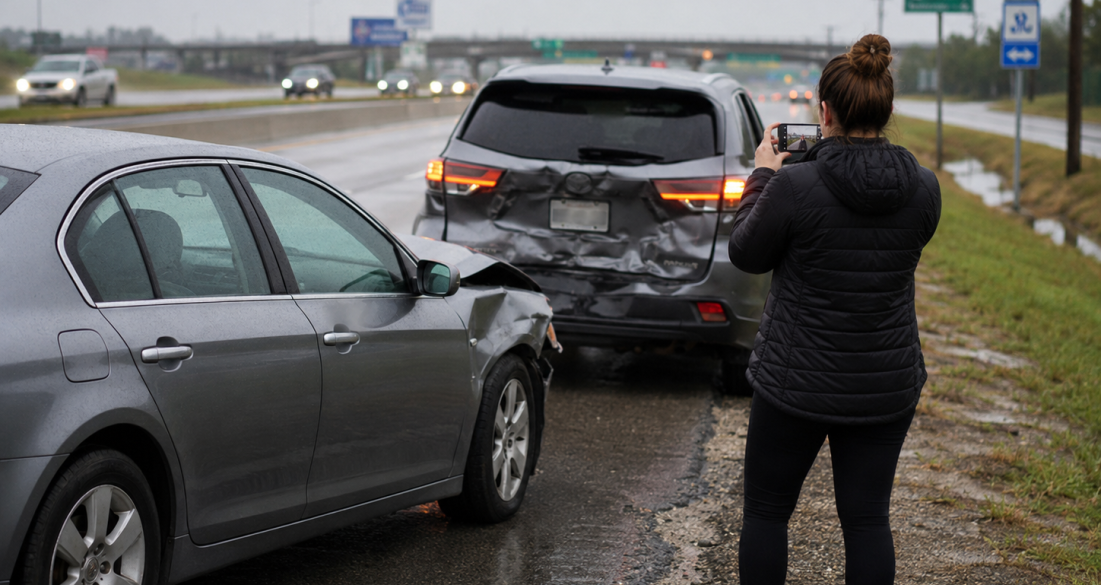
After a Louisiana car accident, check for injuries and call 911, then report the crash if anyone was hurt or property damage appears to exceed $500. Photograph the scene, exchange information, and get a medical evaluation the same day. Avoid recorded statements and quick settlement offers until you understand your injuries, because early decisions shape what the claim can recover later.
The minutes after a collision are loud, confusing, and easy to lose track of. What happens in that window often decides how the claim goes months later.
Most people handle the scene on instinct and only later learn which steps mattered. At My Lawyer Abby, the personal injury practice of Lukov Injury Law LLC, we see how often a claim turns on what someone did in the first hour.
This guide covers each step in order, from the scene through the first week. Contact us today if you have already been in a crash and want to know where you stand.
Safety comes before anything to do with the claim. Once everyone is accounted for, the sequence below protects both your health and your case.
We handle Louisiana car wreck claims that started with a well-documented scene and ones that started with almost nothing, and the difference shows.
Louisiana sets a reporting duty that many drivers do not know about. That duty applies when a crash involves injury, death, or apparent property damage over $500, and the report goes to the proper law enforcement agency without delay.
Where you report depends on where the crash happened. Inside an incorporated city or town, notice goes to the local police department, and outside city limits, it goes to the nearest sheriff’s office or state police station.
Fatal crashes follow a separate legal path for the family left behind, which we handle through Louisiana wrongful death claims. A declared emergency can shift the reporting window, but the safer assumption is that the report happens right away.
The scene exists for a short time, and no amount of later work recreates it. Four categories of documentation carry the most weight.
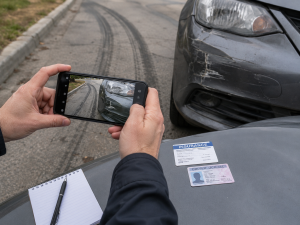 Wide shots establish the layout, and close shots show the damage. Capture both, along with the position of each vehicle before anything gets moved.
Photograph what surrounds the crash as well. Traffic signals, signage, skid marks, road conditions, and sight lines all become arguments later.
A slow walking video of the full scene catches what still photos miss. It takes under a minute and often becomes the clearest record anyone has.
Collect the other driver’s license, insurance card, plate number, and contact details. Photograph the documents rather than writing them down, because transcription errors cause real delays.
Witnesses matter more than most people realize. A neutral third party can settle a disputed account that would otherwise come down to two conflicting stories.
Get names and phone numbers before witnesses leave, since they rarely stay for the officer. Many will not appear on the report at all.
Ask the responding officer for the report number and the agency handling it. That number is what lets you and your attorney pull the report once it is filed.
Reports take days to become available and sometimes contain errors. Reading yours when it arrives gives you time to request a correction.
The report reflects one officer’s view based on limited information. It carries weight with insurers, but it does not decide fault on its own.
Write down what happened while it is fresh, including weather, speed, lane position, and what each driver said. Memory reshapes itself quickly, and a same-day account holds up better.
Note your physical condition as well. Symptoms that seem minor at the scene sometimes matter a great deal two weeks later.
 Adrenaline masks pain, and people routinely leave a crash feeling fine. A same-day evaluation protects your health and creates the medical record a claim depends on.
Louisiana changed what that record has to prove. Under a rule effective May 28, 2025, the old presumption connecting a crash to a later condition no longer applies, and medical evidence now carries the work of tying the injury to the crash.
Head injuries warrant particular attention, because symptoms can surface days later and are easy to dismiss. We handle traumatic brain injury claims where the first complaint came well after the crash, and that delay makes the case harder to build.
The other driver’s insurer usually calls within days, and the requests sound routine. A recorded statement given before you understand your injuries can lock in an account you later need to correct.
Quick settlement offers arrive for the same reason. An offer made before treatment concludes is priced on incomplete information, and signing a release closes the claim permanently.
Social media warrants the same caution during this period. A photograph posted for friends can be read very differently by an adjuster reviewing your injury claim.
The steps that protect a claim happen early, often before anyone is thinking about one at all. At My Lawyer Abby, we take over the documentation and the insurance calls so you can focus on recovering.
You work directly with Abby, not a case manager, and the first conversation is a free case review. Call us today to go over what happened and what to do next.
Disclaimer: This article provides general information and should not be treated as legal advice. Laws change over time, and outcomes depend on the specific facts of each case. No attorney-client relationship is created by reading this article or contacting Lukov Injury Law LLC. For advice about your situation, contact a qualified attorney. Time limits apply to legal claims, so do not delay in seeking legal help.
Louisiana law calls for a report when a crash involves injury, death, or apparent property damage over $500. Notice goes to the local police department inside a city or town, or to the nearest sheriff’s office or state police station outside one. Reporting is expected without delay.
A same-day medical evaluation is worth getting even when you feel fine, because adrenaline masks pain and some injuries surface later. The visit also creates the medical record linking any injury to the crash, which Louisiana no longer presumes on its own.
Photograph vehicle positions before anything moves, damage to every vehicle, license plates, insurance documents, traffic signals and signs, skid marks, debris, and road conditions. A slow walking video of the full scene captures context that individual photos miss and takes under a minute.
In most cases, you are not obligated to give a recorded statement to the other driver’s insurer. Your own policy may include a cooperation clause that applies to your insurer. Waiting until you understand the full scope of your injuries protects you from locking in an incomplete account.
Louisiana sets a two-year prescriptive period for most personal injury claims, measured from the day the injury is sustained. Injuries occurring before July 1, 2024, fall under the older one-year rule. Some claim types carry different deadlines, so an early review is worthwhile.
Your own policy may carry uninsured motorist coverage, which Louisiana adds to every auto policy unless the insured rejected it in writing. Check your declarations page. Louisiana also bars an uninsured driver from recovering the first $100,000 in bodily injury damages and the first $100,000 in property damage, regardless of fault.
An offer made before treatment concludes is priced on incomplete information about your injuries. Accepting it usually means signing a release that closes the claim permanently, including for symptoms that develop afterward. Reviewing the offer against the full medical picture comes first.
Delayed symptoms are common after a crash. See a doctor as soon as symptoms appear, describe the crash specifically, and report every symptom rather than only the worst one. The gap between crash and first complaint is something insurers examine closely.