Licensed in Louisiana, Texas, and Arkansas
Licensed in Louisiana, Texas, and Arkansas


Louisiana includes uninsured and underinsured motorist coverage in every auto policy unless the insured rejected it in writing on the form the Commissioner of Insurance prescribes. Many drivers who assume they declined it may still be covered, because a waiver form completed incorrectly can be invalid. This coverage steps in when the at-fault driver has no insurance or not enough of it.
The other driver has no insurance, or carries the state minimum against an injury that costs far more. That situation is common, and it is what this coverage exists for.
Many people assume they are out of options at that point. At My Lawyer Abby, the personal injury practice of Lukov Injury Law LLC, the first thing we do is check whether coverage exists that you did not know about.
This guide explains how the coverage works in Louisiana, when it applies, and why you may have it. Contact us today if the driver who hit you had no insurance or too little of it.
 Uninsured motorist coverage applies when the at-fault driver has no liability insurance. Underinsured motorist coverage applies when they have some, but not enough to cover the loss.
Both sit in your own policy and pay when the responsible party cannot. The claim runs against your own insurer, which is a different relationship than a claim against the other driver’s carrier.
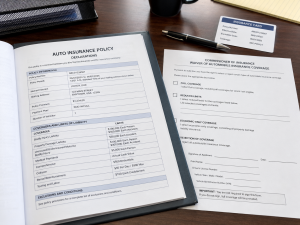
Louisiana structures this coverage as the default rather than an add-on. It is included in every automobile policy at limits equal to the liability coverage unless the insured rejects it, selects lower limits, or selects economic-only coverage on the form prescribed by the Commissioner of Insurance.
The default-inclusion rule produces a recurring surprise. Coverage frequently exists where the driver was certain it did not.
Rejecting or reducing the coverage takes a specific form issued by the Commissioner of Insurance. A verbal conversation with an agent does not accomplish it.
The form presents four choices: coverage at limits lower than the liability coverage, economic-only coverage at the same limits, economic-only coverage at lower limits, or no coverage at all. The insured initials the selection.
Because the form is prescribed, its execution is examined closely when a claim is filed. Requesting a copy of the signed form is a reasonable first step after a crash with an uninsured driver.
A defect in the form can invalidate the waiver, which restores coverage at full limits. Louisiana courts have set aside selection forms that were not completed properly.
In one instance, the Louisiana Supreme Court held a form invalid because the insurer’s name was not written on it. Details that look clerical carry real consequence.
This is worth checking rather than assuming. A waiver that fails on its face converts a no-coverage claim into a covered one.
An insured may change the original selection or rejection at any point during the life of the policy. Doing so takes a new form submitted to the insurer.
The change is prospective, applying to what happens after it is made. It does not reach back to a crash that already occurred.
Reviewing your declarations page periodically is a practical habit. Coverage assumptions drift over years and policy renewals.
Louisiana limits how coverage combines when more than one policy is available. The limits are not increased merely because coverage exists under multiple uninsured motorist policies.
How this applies depends on the specific policies and the circumstances of the crash. It is a fact-specific question rather than a general rule that produces the same answer every time.
Identifying every potentially applicable policy still matters early on. Household policies and vehicle-owner policies sometimes both come into view.
 Louisiana’s minimum liability limits are $15,000 per person and $30,000 per accident for bodily injury, with $25,000 for property damage. Those figures have not increased alongside recent changes elsewhere in Louisiana insurance law.
A single hospital stay can exhaust a $15,000 limit before treatment concludes. When that happens, underinsured coverage addresses what remains rather than leaving the injured person with the shortfall.
Riders face this gap more often, since injuries in a motorcycle crash tend to be more severe against the same minimum limits. We handle motorcycle injury claims where this coverage carried most of the recovery, and Louisiana wrongful death claims where minimum limits fell far short of a family’s loss.
Coverage type determines who pays and under what terms:
One procedural point matters here. Louisiana narrowed the general right to sue an insurer directly in 2024, and uninsured motorist claims are among the situations the law still allows.
The relationship also shifts in a way people find uncomfortable. Your own insurer is now the party evaluating and potentially disputing your claim, and the same documentation standards apply as in any Louisiana car wreck claim.
Coverage you did not know you had is worth finding before you accept that there is nothing to pursue. At My Lawyer Abby, we review every policy in reach and the waiver forms behind them.
You work directly with Abby, not a case manager, and the first conversation costs nothing. Call us today to find out what coverage may apply to your crash.
Disclaimer: This article provides general information and should not be treated as legal advice. Laws change over time, and outcomes depend on the specific facts of each case. No attorney-client relationship is created by reading this article or contacting Lukov Injury Law LLC. For advice about your situation, contact a qualified attorney. Time limits apply to legal claims, so do not delay in seeking legal help.
Possibly, even if you think you declined it. Louisiana includes the coverage in every auto policy unless the insured rejected it in writing on the form prescribed by the Commissioner of Insurance. Check your declarations page and request a copy of any signed waiver form.
Your own uninsured motorist coverage may respond, if your policy includes it. The claim then runs against your own insurer. Louisiana also bars an uninsured driver from recovering the first $100,000 in bodily injury damages and the first $100,000 in property damage, so your own coverage status matters.
Uninsured motorist coverage applies when the at-fault driver has no liability insurance at all. Underinsured motorist coverage applies when they carry insurance but the limits are not enough to cover the loss, addressing the shortfall above their available limits. The distinction turns on whether the at-fault driver had coverage and how much, not on how the crash happened.
Yes. The rejection form is prescribed by the Commissioner of Insurance, and a form that is not properly completed can be set aside. Louisiana courts have invalidated selection forms over defects, including a case where the insurer’s name was missing from the form.
Louisiana’s minimum liability limits are $15,000 per person and $30,000 per accident for bodily injury, plus $25,000 for property damage. Those minimums did not change alongside other recent Louisiana insurance law updates, which is why underinsured coverage matters on serious claims. Your own coverage limits are a separate question from the state minimum.
Yes. An insured may change the original selection or rejection at any time during the life of the policy by submitting a new form to the insurer. The change applies going forward and does not reach a crash that already happened.
Rating practices vary by insurer and are governed by their own filed rules, so this is a question for your agent or carrier rather than one with a single answer. The coverage is designed to respond when the at-fault party cannot pay.
It can. Once the claim runs against your own policy, your insurer evaluates it the way any carrier evaluates a claim, including on causation, treatment, and value. The same documentation that supports a liability claim supports this one, and building it early tends to matter more than arguing about it later.